An autobiography
Forward by her son Bill Linton January 2023
On October 28, 2022, my mother Bette Linton passed away while sleeping in the comfort of her own home in Fitchburg, Wisconsin. Just 3 months shy of 101, Bette lived a long and fulfilling life as you will see in her autobiography titled “Under Four Flags”, which she wrote about 5 years ago. She leaves behind three children, Pat, Bill and John. Two of her children, Charlene and Gerry, preceded her in death at relatively young ages. She had eleven grandchildren and fifteen great-grandchildren.
What follows is Bette’s life story in her own words.
Living Under Four Flags
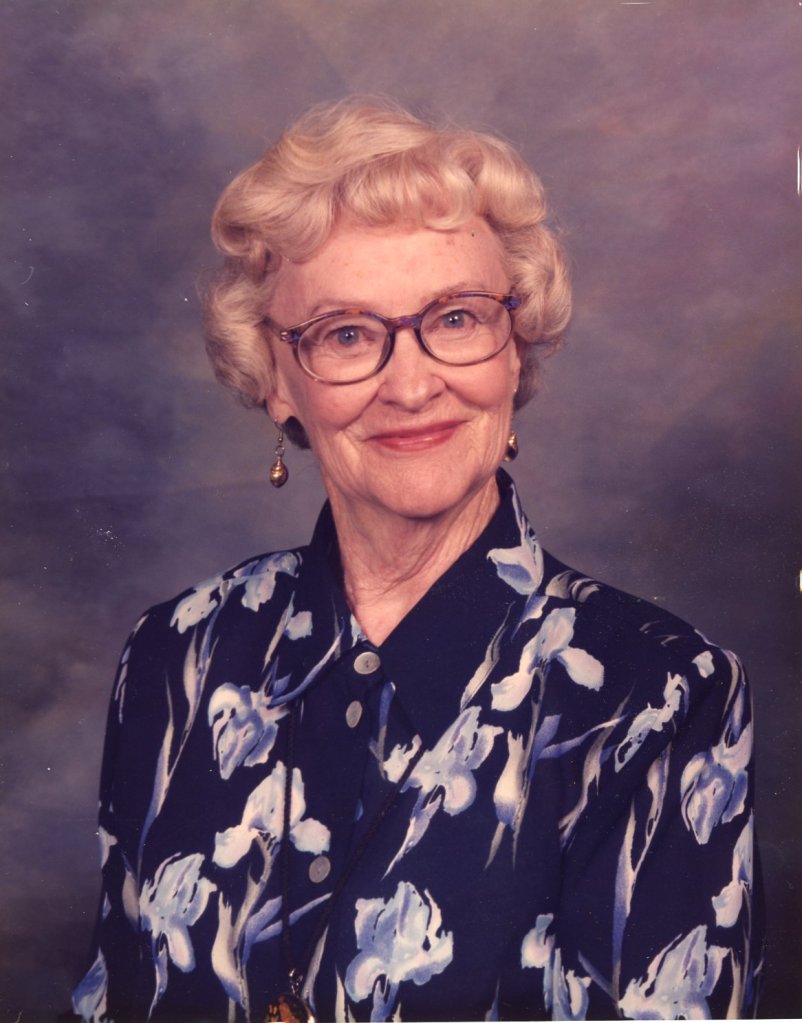
Alma Elizabeth Linton
1922-2022
This is the story of my life. My earliest memories may reflect what I was told, or even what I have imagined, but after the age of four I have related only what I remember.
I was born in Datong in the province of Anhui in China on the 5th of February, 1922. My parents joined the Christian and Missionary Alliance while they were in China.

Bette as an infant, 1922
My earliest memory was of being held in someone’s arms and told to look up at the stars. This person then said,
“Twinkle, twinkle, little star,
How I wonder what you are,
Up above the world so high,
Like a diamond in the sky.”
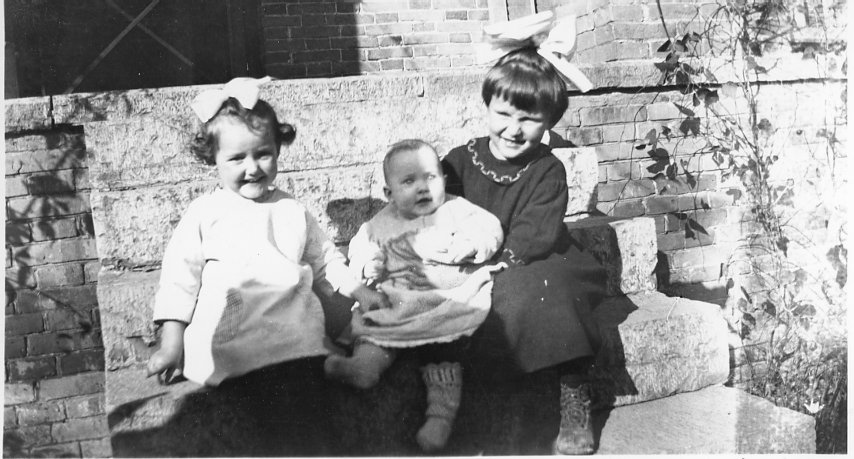
Alma Elizabeth Jacobson as an infant, held by two older sisters
Sometimes the neighbor’s cats would howl and fight on the compound wall just below our bedroom window. They woke Doris, my sister and she would call my Father,” Daddy, Daddy, cats! He then would get out of bed and chase them off the wall.
One night when this happened Father came into the bedroom and said,” No, no, that is just your new baby sister crying”. I was only two at the time, and don’t remember, but I’ve heard it so often I will include it in my early memories.
Another memory might be one I imagined, after it was told to me so many times. Mother was stuffing our dolls into a wood burning stove in the living room. Both my sisters were crying. Why was Mother doing this? She thought that if we left the dolls in the house after we left for America, the Chinese would think they were our idols. She could not pack them nor leave them. My parents had started to pack our belongings to return to America. Every seven years, at that time, missionaries were granted a visit back to the U.S. to see family members and to raise funds in their churches to support them on the mission field.
Our journey from Anhui took us down the Yangtze River (now called the Chang Jiang) to Shanghai. From there we would take an ocean liner. That year we boarded the Empress of Russia. I have no memories of that boat nor the train we took to Chicago.
In the mid-1900’s Chicago was a city of horse-drawn carriages and street cars. There were elevated trains called the “L”. I remember the Five and Ten Cents store and a large department store called Weiboldts. One could buy everything one needed for the home. This store had an unusual method of making change. They took your money and the invoice, placed it in a metal cage and sent it by wires up to the floor above. Here the people replaced the money and the invoice with a receipt and whatever change was owed into the metal cage and sent it back to the clerk on the first floor. Most of the purchases were wrapped in newspaper and you put them in a shopping bag you had brought with you. I remember a bakery and a butcher shop. The latter had sawdust on the floor.
My father’s parents left Sweden in the 1800’s. Many wanted to come to the New World to have their own land or businesses. My grandparents arrived in Chicago with money they had saved, and both Grandfather and Grandmother were skilled as tailors. Grandfather’s first store was on Michigan Avenue in downtown Chicago. One of the first things my Grandfather did was to change his name from Murk (Mörk), which meant “darkness” to Jacobson. His Father was John Jacob (Mörk) so for $5.00 he became Jacobson.
My grandparents made suits for all their sons. There were four sons in the family. Albert, David, Clarence and Gerhard (my Father). There were two daughters, Anne and Judith. My Father told me that at one time he had 17 suits. He also would tell me that a suit I had bought did not fit well in the shoulders.
Grandfather built a three-story home on 3045 Clifton Avenue and across a small lawn he built an apartment building, which provided additional income.
My Grandfather died of pernicious anemia while my Father was still in his teens.
When we arrived in Chicago we lived in the apartment building on the second floor. Grandma Jacobson and Aunt Anne lived in the main house. Aunt Anne gave piano lessons after Grandfather died, and she and Grandma received an income from the three apartments.
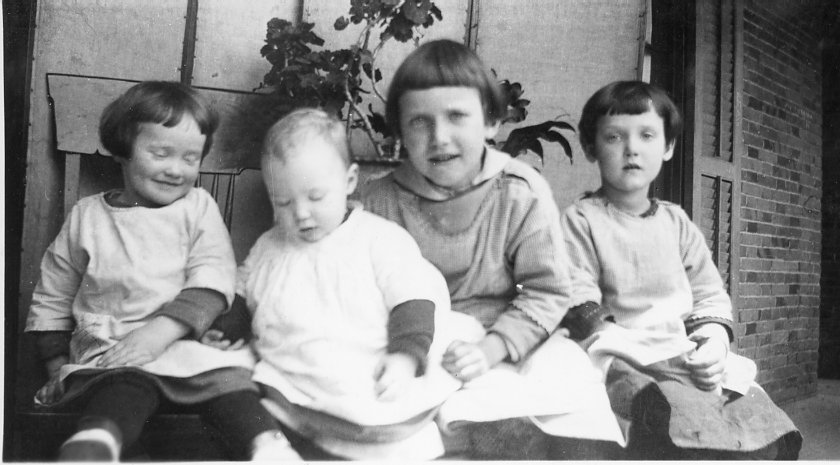
Four Jacobson sisters, Bette far left, about 1925
Grandma Jacobson (maiden name Anna Louise Svenson, born in 1857 in Sweden) often stepped outside her kitchen door and called to us when we were living in Chicago. “Come over and have some bread and “yelly”.” She baked bread every week and made jams, jellies, which she shared with us. She was an excellent cook.
While we were living in Chicago, my Father made sure we all knew where we lived – 3045 Clifton Avenue – in case we ever got lost.
In those days we traveled to church on Sundays riding the street cars or taking the elevated train. We attended the Moody Church, founded by Dwight L. Moody. His birthday and mine were on the same day. Every year the church celebrated “Founder’s Day”. I don’t remember hearing Dr. Moody preach, but I did hear Gypsy Smith a few times.
I attended Sunday School and the teacher asked if I had given my heart to Jesus. I must have been about five years old at the time. I did as she asked. All teachers at that time wanted to be certain their pupils were saved.
Moody Church is well-known in Chicago even today. They started a Bible Institute and a Radio Station, WMBI. Later when Grandma Jacobson had a radio, she listened every day.
Grandma’s house was cleaned every Saturday. She also washed and hung the clothes and sheets outside. Then she baked bread and prepared for her guests who would come for Sunday dinner. She usually invited her sons, their wives and children, so I met all my aunts and uncles on Sundays.
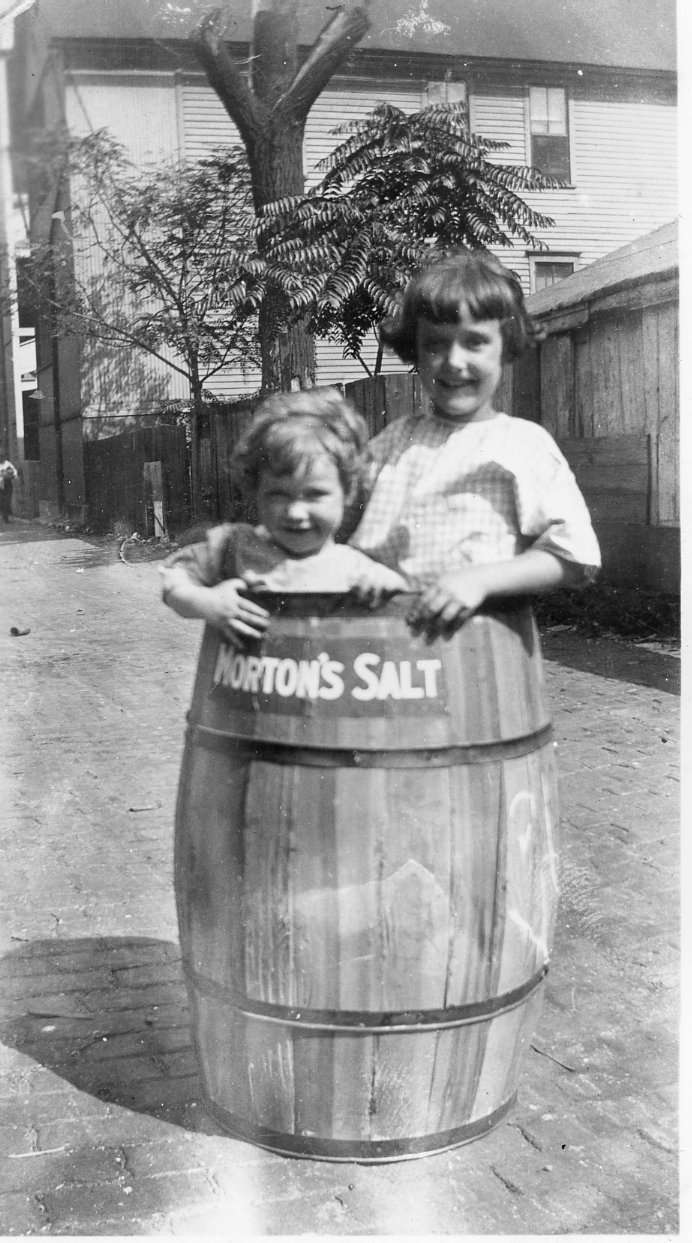
Behind Grandma’s house there was an alley. The trash man in his horse-drawn wagon picked up the trash; the milk man brought milk, cream, butter and eggs and there was a man who called “rags and old iron” driving his horse and wagon down the cobbled stone alley. Once when there was an empty “Morton Salt” barrel in the alley, my Aunt Anne picked up Winnie and me and put us in it to take a picture. I have that picture today.
Behind Grandma’s house there was an alley. The trash man in his horse-drawn wagon picked up the trash; the milk man brought milk, cream, butter and eggs and there was a man who called “rags and old iron” driving his horse and wagon down the cobbled stone alley. Once when there was an empty “Morton Salt” barrel in the alley, my Aunt Anne picked up Winnie and me and put us in it to take a picture. I have that picture today.
On the ground level of Grandma’s house was her kitchen and a dining area with six chairs. Another large section had laundry tubs, her washing machine and a large coal furnace to heat the house.
Up the highly polished stairs was the second floor. Here was her formal dining area and a large living room. Off the living room was an alcove which was curtained off from the living room and here Grandma had her bed and dresser. On this floor was a bathroom also.
On the third floor Aunt Anne had her bedroom. There was another room, which was used as a guest room. This floor was under the roof, so the rooms were hot in summer and cold in the winter.
When my father was in his early teens he followed a gang of boys in the neighborhood who stole things. They were often chased by policemen, and they jumped the fences in the backyards to get away. Before my father became a Christian and was quite young, he lived in a way he did not want to talk about. However, I remember his telling me of a time he went with a gang of boys, and they were chased by the police over the fences in the back yards. I’m not sure what they were doing, or even if they were stealing things, but he told me that once when he was jumping over a fence, he caught his right arm on a clothes line hook and hung there for a time. I don’t remember how he got down, but he told me that he said he would never again be a part of a gang.
My Father gave his life to Christ when he joined the Christian Endeavor meetings at Moody Church. It was customary for new converts to give a “testimony” and all he could think of was “Jesus saves” and sat down. He was embarrassed when the older boys laughed at him.
That year in Chicago I had my tonsils taken out, as this was what doctors advised my parents to do. They knew we would not have an opportunity to have it done in China. In the hospital I can remember bleeding one night on my pillow.
We were given ice to suck and ice cream to eat, and this was a treat.
That year my parents visited a family where their young daughter had died of a burst appendix. She said, as she was dying ”I see horses and a chariot coming for me.” I was given this girl’s beautiful doll and a small suitcase with the doll’s clothes. But as I was carrying it out the door I tripped and broke the doll’s porcelain head. I had to give it back. Often, I’ve wondered if we could not have glued the head. But Mother didn’t want any of us to have dolls. You know what happens to dolls in China.
That year my Father had all his teeth removed. He didn’t want to have a toothache in China. He lay in a darkened room moaning and groaning afterward, but later he would often remove his false teeth and boast,” I’ll bet you can’t do this”!
In the same apartment house there lived a girl named Harriet. She sometimes came to our back door and yelled,” Oh-oh Betty”, until I would come out and play with her. Often Mother would chase her away.
At the front of the house, we often sat on the curb of the street and waited for the man who sold “All Day Suckers”. These were caramels on a stick and were expensive. Once someone bought each of us one of these treats.
Memories of breakfasts are not good. Mother cooked oatmeal every morning and I disliked the smell, the grey sliminess of it, so I rarely ate more than one spoonful. I had to sit for hours, but even to this day I do not eat hot oatmeal for breakfast. I don’t mind oatmeal cookies. Mother made me an eggnog sometimes in the mornings, however.
We lived in Chicago about a year, after which my father accepted a pastorate in Hortonville, Wisconsin.
The parsonage was adjacent to the church and there was an outhouse in the backyard. Collection money was carried from the church to the house to be counted. Sometimes the money fell out of the baskets, and I found them. Evey, my youngest sister was jealous and said” Why didn’t I see that dime”?
Later that year my two older sisters were baptized in this church. I remember their long white robes and the choir singing,” Where He Leads Me, I Will Follow”. I remember thinking that when I was baptized, I wanted to wear a white robe, also.
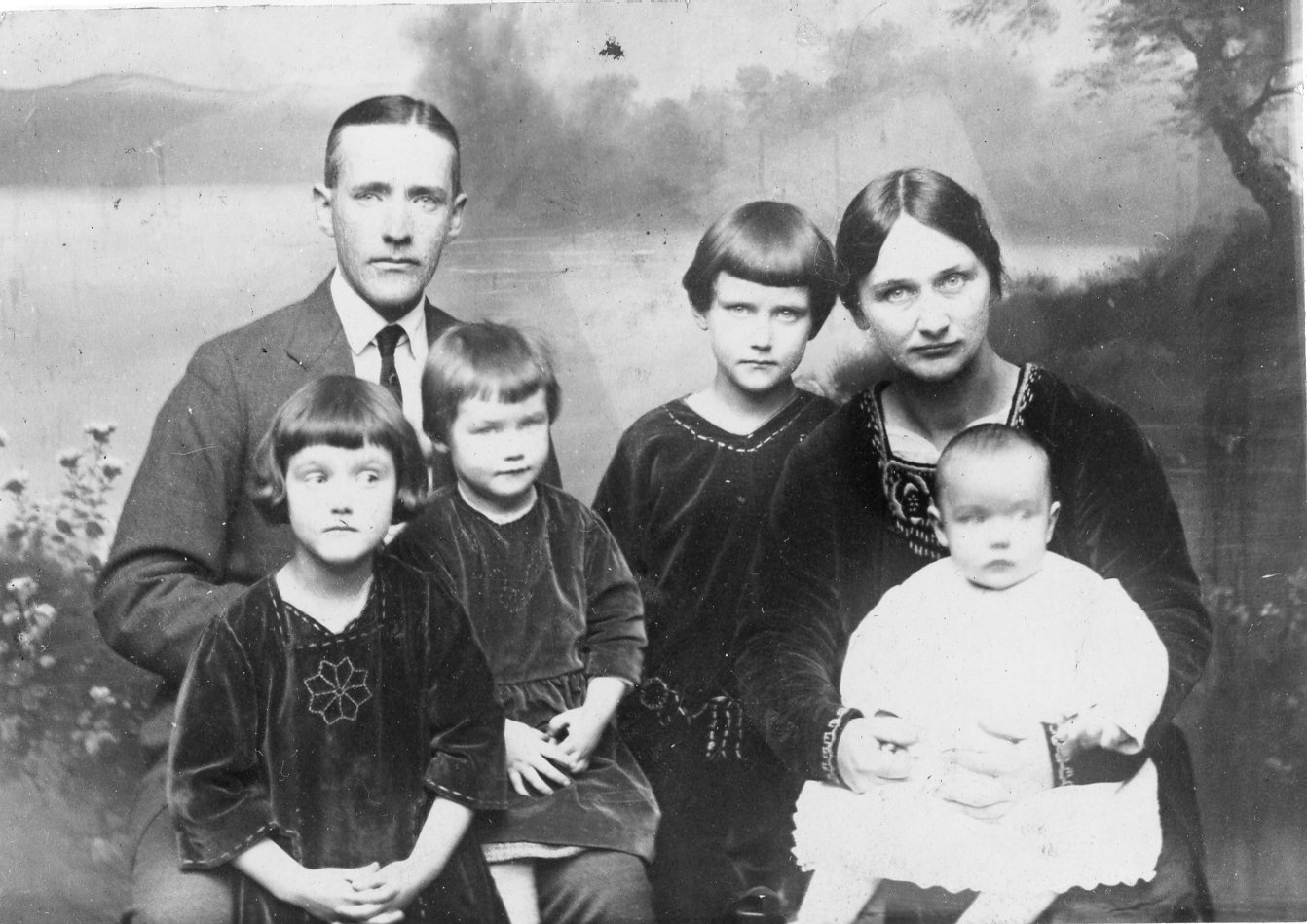
Jacobson Family – 1925
One of the ladies who often sat behind us in church smelled of vanilla perfume, and to this day the scent reminds me of this church in Wisconsin.
On the lawn of the house was a lilac tree, which was in full bloom the year we left for China.
Uncle John, my mother’s brother-in-law often drove from Michigan and took my Father fishing in the Wolf River. Once Uncle John drove me in his old car into town and I fell out of the car. He picked me up, dusted me off and drove on.
I went to school in Hortonville and met a boy named Glen Givens. I thought he was cute, but he never knew I existed.
After school we were told we had to return home at once. If we didn’t, we would get “the stick”. Once we dilly-dallied and we got the stick. We cried so loudly before Father spanked us that he only tapped us, and we said later,” That didn’t hurt!”
During the early winter of that year mother had another baby girl which she named Lillian. The baby was still-born and is buried in the cemetery in Hortonville.
That year I was sick with the flu, had nose bleeds and coughed a lot. This kept my sisters awake at night, so Mother moved me downstairs to sleep on a couch in the living room. One night I woke up and saw an older woman sitting next to me. She seemed transparent and had a kind face. I covered my head with the sheet and screamed for Mother. She came in and asked me what the matter was and when I told her and said I would not sleep on the couch anymore, she allowed me to sleep with her and my father that night.
Spring in Wisconsin brought warm and sunny days and my parents began to pack, as the Mission had decided to send them back to China. For some reason unknown to me, my parents sent me to live with Uncle John and Aunt Rhoda in Tiskawa, Michigan.
There I was introduced to three very smart and clever cousins. I couldn’t follow the table conversation nor understand their jokes, so I sat in silence most of the time.
My cousin Lois became an accomplished pianist, Vera was a nurse in the Congo, Jack was a journalist and Carol was editor of Christianity Today.
Uncle John wrote commentaries used by seminary students and also had a Baptist pastorate in Detroit. Aunt Rhoda was a gentle, sweet, patient person and had a great sense of humor. I think I stayed with them only a month.
Leaving Hortonville we went to Chicago and said “goodbye” to Grandma Jacobson, Auntie Anne, Uncle Waldo, Mother’s brother and Aunt Mildred.
We then boarded a Northern Pacific Train to Vancouver. The “roomette” my parents had was filled with flowers, fruit and candy. Those were the days when leaving for the Far East was special, especially since we would not be seeing our relatives again for seven years.
The train stopped briefly in Winnipeg and father bought each of us an ice cream cone, which seemed granular, but as my Father said, “It will be a long time before you will have an ice cream cone again.” And he was right. From Vancouver we sailed for China on the Empress of France and there I met a red-headed boy named Alfred, who cornered me and kissed me. I thought he was very silly.
We had Oriental cabin boys and one morning one of the young boys who made up the bunk beds each morning enticed Winnie and me into the cabin after breakfast. He told Winnie he had something for her on a top bunk and to climb up the ladder. He said he would help her and he put his hand between her legs. Winnie warned me, so as I started up I pushed his hand away. We told our parents and we never saw that cabin boy again.
When the sea became rough and stormy my father gave us Mother Sill’s Seasick Pills which kept all of us from being seasick. I believe we ate every meal served on the 27 days we crossed the ocean.
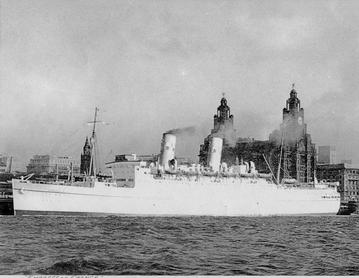
Empress of France – About 1930
When the boat arrived in Kobe, Japan, my father told us to stay close to him at all times. He seemed nervous as the coolies swarmed the decks. However, he’d left something in the dining room and asked me to run and get it. I wasn’t happy at all to leave him but went down the stairs into the dining room and came back with the article. You can be sure I was relieved to be back with the family again. When we got to Yokohama, I remember Mother buying pearl and jade necklaces for each of us. I wonder what happened to them
CHINA AT LAST
We left the land where the red, white and blue flag flew over buildings, lawns and boats on the water. We entered the land where the red flag with a few yellow stars appear in the corner.
Shanghai was a city of contrasts. There were Indian Sikhs, who policed the streets by blowing whistles and holding up their batons for the traffic to stop or start. There were Chinese pushing wheelbarrows; rickshaw men pulling people around the streets for a few coppers and businessmen dresses in suits, ties and carrying briefcases. People from France, England, India and Japan were living in Shanghai at that time.
I remember I had nightmares a couple of times while we were living in an apartment in the French Settlement. I dreamed someone was coming into the bedroom and I could not call Mother.
Another memory was of the man who had an epileptic seizure on the street behind our kitchen window. A passerby put a cabbage leaf in his mouth, and Mother said this was so he would not bite his tongue.
For about a month my younger sister and I studied in an American School in the American Settlement. I am not proud of what happened here. Our teacher did not want to bother to correct our spelling tests, so asked us to pass our papers to the student sitting behind us. This girl told me that if I didn’t count all her mistakes, she would do the same for me. In other words, “cheat.”
When I finally went to school in Kikungshan I asked my roommate who sat behind me to cheat, also. She thought this was a great way to get good grades, so for both our spelling tests and arithmetic papers we “cheated”. Our teacher was also reluctant to correct papers. Fortunately, we were caught. A boy in the back of the room saw the knowing glances we gave each other and told our teacher to begin collecting the tests. We were not expelled, but everyone found out about it, and it was a sad lesson I have never forgotten.
My Father had gone ahead to Anhui where my parents had been sent by the Mission, and my two older sister started school in Kikungshan in Honan Province. In the interior Provinces, foreigners were not welcome. We were called “foreign devils” and I can remember crowds following us, some would spit, or throw stones. More than anything I hated being stared at as if I was a freak.
Anhui has a moderate climate. It snows rarely and tropical plants flourish. We had a banana tree, pomegranate, and cherry tree in our yard.
BOARDING SCHOOL
Roaming bandits and robbers threatened the village one year, so our school moved to Hunan Province. The British had built a school in Kulingshan. There was a dormitory named Redcroft. Today this building is a hotel.
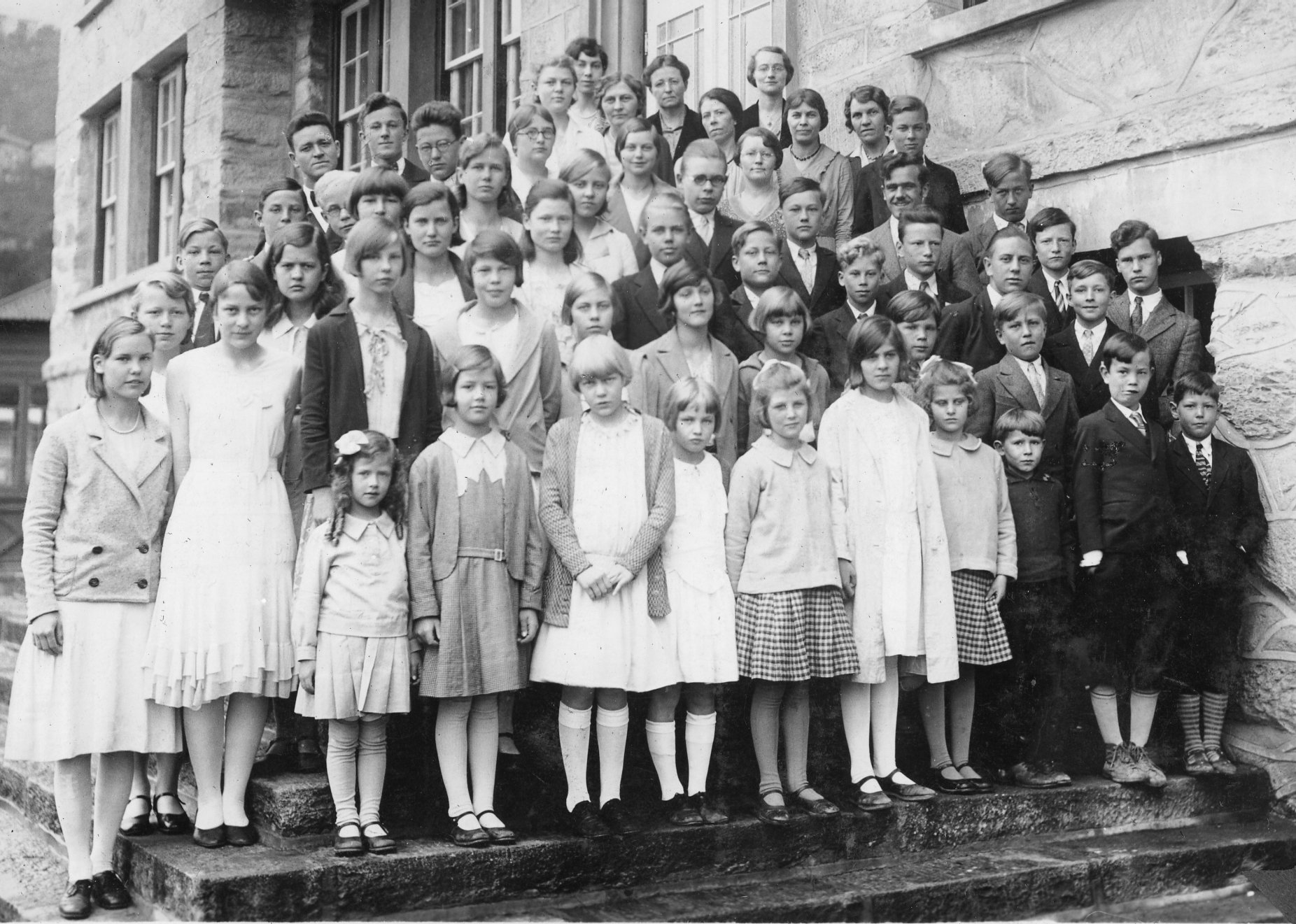
Kuling School, Redcroft 1931
There were other buildings our school used, and a large generator provided electricity during the evening. Although we had some heat, we needed down quilts at night during the winter months and wore woolen clothing and long stockings. Our clothing was made by local tailors during the summer months when our parents stayed with us.
Every summer my parents rented a home. Once we lived in the “Briar Patch”, where our cleaning woman fell over the balcony. (She wasn’t seriously injured.) Another summer we lived in a little house in the woods and shared it with a godly couple. The man got up very early every morning and prayed and sang outdoors. Another year we lived on a hillside where we saw green Luna moths and beautiful blue and black butterflies.
There were many snakes in Kuling, and once Doris pulled a snake out of a hole where it had crawled. She had seen it swallow a yellow finch.
Kuling had an Olympic-sized swimming pool. One summer I jumped from the highest diving board. We didn’t swim every day because the places we had rented were too far from the pool.
When I started school in Kuling I had to sleep in a crib in the home of a missionary family. Three other girls also slept in cribs until the school found bunk beds for us in the main dormitory.
Anabel, Agnes, Lillian were my first roommates. Dorothy was a classmate of mine who made up plays and dressed up as a boy. She acted out the part of a rejected lover or someone who was dying of a terrible disease. These dramas seemed so real to me I felt sad for hours.
Furniture had to be moved around when we put on our plays and Dorothy sometimes asked other students to sit on the beds to watch. I began to enjoy these pretend events. Today they remind me of the TV soap operas.
In Kuling there were so many things to do and to see I did not miss life with my parents. I made new friends, took piano lessons and long hikes to places called The Three Trees, where three giant redwoods grew: Incense Mills, Paradise Pools and the Emerald Grotto. The trees were sacred to the Chinese and there was a temple nearby.
Saturday nights was “Game Night”. We sang and danced Norwegian folk songs. I remember several of the game: “There’s a Light in the Window”, Skip to m’Loo”, “The Needle’s Eye”, “ B I N G O” .
The “little kids” had their own evening prayers and Bible reading time with the matron of the school, Mrs. Lindell. She read Bible stories every evening, and then we would pray and sing two closing songs, “Give Me Oil in my Lamp” and “Jesus, Tender Shepherd, Hear Me”.
On Sunday evenings we had a “song service” when we could choose the hymns. Then our principal gave a short talk, which was followed by a time of testimonies and prayers.
Tragedies happened that year. One of the boys drowned while crossing a treacherous stream bed, another student nearly died of pneumonia and then a young girl became ill with “black smallpox” and died.
I have a special memory of that year in Kuling. It was the night of my 11th birthday which fell on a Sunday that year. I chose a chocolate cake with white frosting as my birthday cake and there were eleven candles.
After dinner we had the usual song service, but during the time of testimony one of the most popular older boys stood up and said,” Oh God, I am a worm”. I came remember the silence that followed. I believe the Holy Spirit then convicted most of us of our sins in God’s eyes. All the students began to cry quietly, and we knelt to pray.
The principal finally said,” Let us pray the Lord’s Prayer together and go to your rooms.”
I was deeply convicted of my sins of pride, gossip and a judgmental attitude toward others. I thought I was superior to the Chinese around me. I asked the Lord to forgive me, and He did.
When I went outside that morning, the sky was bluer, the snow whiter and I felt as if I was happier than I had ever been. From that day onward the girls met in each other’s bedrooms before the rising bell rang. We read Scripture and we prayed together.
I heard years later that a missionary in another province had been praying for a revival to come to the school in Kuling. He was convinced that many of the students had never committed their lives to Christ. Yes, they had been baptized as infants, but had never been saved. I had also been baptized when I was 10 years old with a few Chinese. We did not wear white robes, nor was there a choir singing. I was baptized in a river. The Lord knew my heart. He knew I was thinking of the place and the people and not what baptism should mean to a believer. Yes, I needed a change of heart. The school celebrated all holidays. We wore costumes for Halloween, put on plays and had elaborate Thanksgiving programs, which featured the American Indians in America. Christmas was usually spent with our parents, so we had a three-week holiday from the first week of Christmas until the first of January. It took most of us over a week to get home.
Our school matron was an unusual cook. I can still remember the pies, cream puffs, puddings, and beef stews. Often, she had the cooks make Swedish pancakes, which the kids said were “fish pancakes”, because they were folded over and over until they looked like a fish. We poured melted butter and syrup (which she made with brown sugar) over the pancakes.
I had never eaten such delicious food. We drank milk at every meal and were taught table manners. We could not sit down to the table to eat before we had all said grace aloud together.
On Saturdays we changed our sheets, made our beds and put our clothes in laundry bags for the servants to wash and iron. They were brought back to us folded and in neat piles put at the end of our beds. We had inspection of our rooms every Saturday morning at 10:00 o’clock. Then in the afternoon after lunch we would often go on hikes or go swimming.
A British school located in Kuling invited us to their school for special events. Once they invited us to see “The Merchant of Venice”, which was very well done. Another time we were invited to one of their band concerts. I suppose we invited them also, but I don’t remember if this happened.
The following year our school moved back to Kikungshan. Again the mountains there seemed to be safe. The following summer my parents were able to go on furlough, and we traveled back to the States on the Empress of France.
GLENDALE, CALIFORNIA
Instead of going back to Chicago, my parents had rented a cottage in Glendale, California. The cottages on Mission Road were owned by Mrs. Suppees.
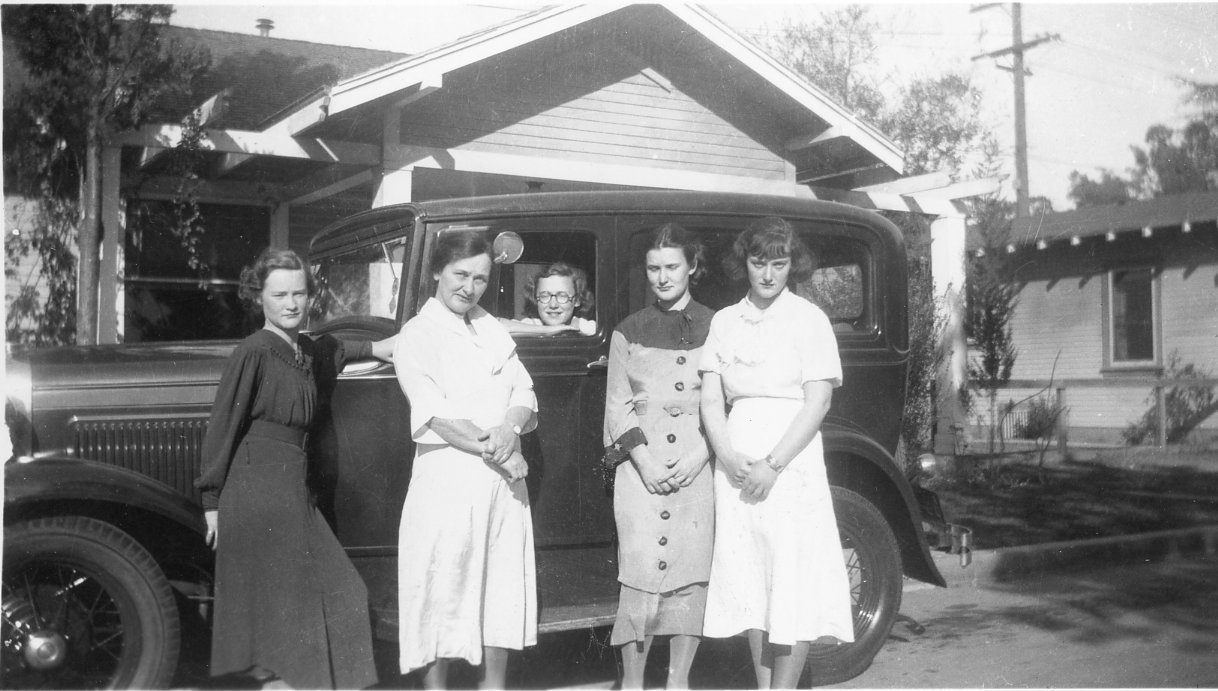
Bette, far left, Glendale, CA about 1936
During the first World War she had noticed that the government gave their veterans homes to live in. She talked to God,” Why can’t missionaries have a place to stay when they come home on furlough?” So she began to pray for money to build and furnish cottages for 20 missionary families.
One day an oil company asked if they could drill on her land. When they drilled, they struck oil and the well gave her exactly the sum of money she had prayed for. That year in Glendale our cottage was next door to a missionary couple and their two daughters. They were Presbyterian missionaries in Mongolia. Mertis and Laurabelle were in the same school as I was in Glendale. Often, they talked about their great school in Korea, and hoped I would one day be able to visit them there. The school was located in what is now the capitol of North Korea, Pyongyang. The school was started by Presbyterian missionaries and two years later I met my future husband there.
The elementary school in Glendale was about a mile from our home on Mission Road. We carried sandwiches, and fruit in a small paper bag, but bought milk from the school.
After school there was a Christian Club called “Euodia” which I attended, where I met other Christians. I remember thinking there were not many of us.
Sundays, we attended the Christian and Missionary Alliance Church, but sometimes in the evenings we went to the Church of the Open Door. Once we went to hear Aimee Semple McPherson preach after she had returned from a visit to Palestine, and she passed out pebbles to everyone in the congregation. It was a very large church and I once met someone who gave her heart to Christ in that church. I found it hard to think this could happen, since Mrs. McPherson spoke only of her trip to Palestine when I heard her speak. Palestine later became the land of Israel.
We had a radio in our home in Glendale and during the day my Father often listened to baseball games. He wanted the Chicago Cubs to win the pennant, and once when we were visiting Chicago he took me to see the Cubs play. That was the year they won the pennant in Wrigley Field.
On Saturdays we were often taken to Manhattan Beach to swim in the Pacific Ocean, and once while sleeping under the beach umbrella, I got a severe sunburn.
That autumn we drove on Rout 66 to Chicago in my Father’s Model A Ford across the desert into Bakersfield, where we slept during the day, because we had crossed the desert at night.
On the way we visited Yellowstone National Park, saw a bear, Old Faithful, slept in motels, (four of us in one bed) and skidded off a wet highway into a cornfield, but none of us were hurt, just frightened.
Some months later my father went to Detroit and bought a newer model Ford, which he had shipped to Shanghai. Years later the Japanese took this car when they invaded China. That was in 1936 or ’37.
UNDER THE CHINESE FLAG
We took the General Grant steamship back to Shanghai, and the trip was uneventful. Doris remained in the United States and attended Wheaton College in Illinois. Winnie, Evey and I returned to school in Kikungshan where I struggled trying to learn geometry. I loved biology, taught by Miss Sovik, and I remember cutting up a frog and a cat.
Our new principal was Mr. Albue. He directed our choir, and we sang John Stainer’s choral “God So Loved The World.”
Mr. Albue was concerned about our spiritual lives and invited each student into his office and asked us about our relationship to the Lord. He died about 2 years later in Hong Kong of a burst appendix.
The next year all foreign schools left China, since the Japanese had bombed Shanghai and consulates told all foreigners to leave. We took a train to Canton, and from there a boat sailing down the Pearl River into Hong Kong.
Hong Kong is a beautiful city built on a hillside overlooking a spacious harbor. At that time the American and British Fleets were stationed there, also Chinese junks and sampans sailed in and out from cities along the coast. The Portuguese owned the city of Macao, and the Portuguese strongly influenced the culture.
A British School accepted Evelyn, but neither Winnie nor I were accepted at our grade level. We had not had enough science nor math. So, Mother enrolled us in a Portuguese School of Accountancy and Commerce, where we took typing, shorthand and bookkeeping. For three months we studied these three subjects.
My Father had returned to Shanghai after the Japanese left Shanghai and surveyed the damaged mission property. In January, he wrote Mother that we should join him, so we took the steamship, “The Nellore” to Shanghai. This boat travelled along the coastline of China, and I remember it very well, because I was seasick after we left Hong Kong until our boat landed in Shanghai.
I remember my sisters urged me to get out of bed and eat fresh pineapple chunks. It was the first thing I was able to keep down after two days in bed.
The Mission had put my father in charge of the mission property. There were two schools, two churches, a Radio Station, XMHD and also the Alliance Press, which printed Bibles and tracts in Chinese. On the property was a house which had been bombed by the Japanese, and when my father arrived there was an unexploded bomb in the courtyard.
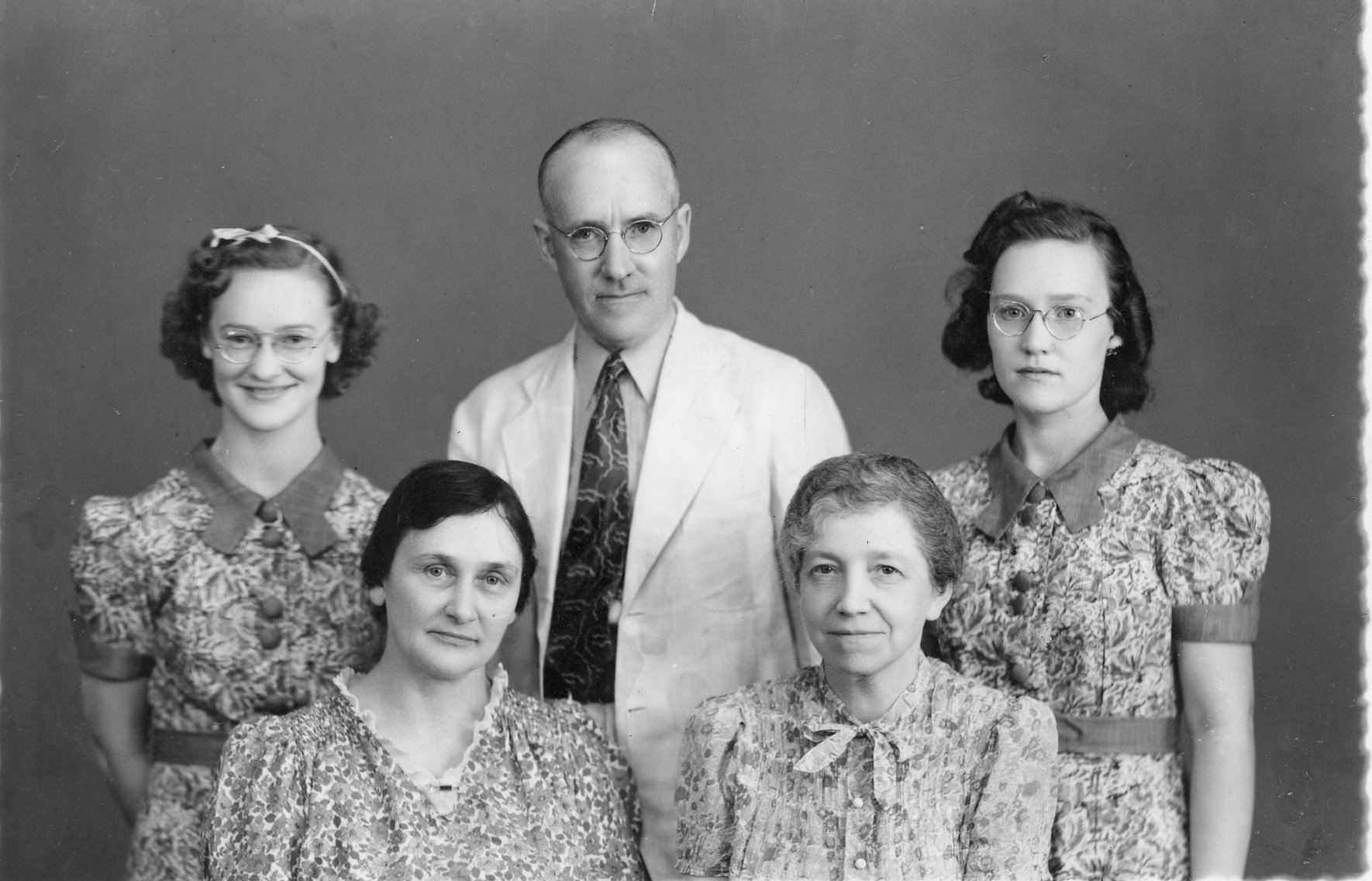
Bette to left with Mother and Father, Sister, and Caretaker
I can remember the ruins as we walked to the mission property that first year. The area was policed by guards because there were shops with jewelry still in the windows and open doors with canned food and household supplies on shelves.
Later my father was able to hold services again in the church and had to have interpreters translate the messages into two languages: English and German. Jewish refugees arrived from Hitler’s Germany and attended the services. They made their living selling whatever of value they had brought out of Germany, or they joined the local Jewish community already flourishing in Shanghai. Victor Sassoon owned a large hotel in Shanghai and others were part of the banking establishment.
That January Winnie and I enrolled in a British School for young ladies, learning all over again how to type, write shorthand and compose correct business letters. We started from scratch, and I can still hear Mrs. McComnick’s voice,” You are completely hopeless”!
Her tests were exacting and if we did not pass them, we started over and over again. In June we left the school, and I’m sure according to our teacher, we would never become good secretaries.
Winnie left that summer to attend the Simpson Bible Institute in Washington State. Mother did not want me to attend the local America School in Shanghai. I reminded her of the school the Byram sisters had told us about in California, so my parents wrote to the school, and before September I was accepted. Evey was still in Hong Kong and would remain there for another year.
When I left Shanghai, I was alone the first day, until we stopped briefly at Tsingtao. Eight students boarded the ship also going to the school in Pyongyang. They were good traveling companions and one of the boys had a beautiful tenor voice. He sang at my wedding, years later.
We left the boat in Dairen and then took a train to Pyongyang.
Arriving at the school I learned my roommate was Mertis Byram. She introduced me to the other students in our class, explained the school rules and the interesting events occurring during the school year. This school was quite different from the one in China. We attended movies on Saturday afternoons, were able to ice skate on the river near the school, played tennis, and during my senior year we took a long weekend off to hike in the Diamond Mountains.
UNDER THE KOREAN FLAG
Korea is a land of extreme temperatures. Siberia blows snow and icy winds into the peninsula, and in summer the heat can be intense. The autumn our senior class hiked in the Diamond Mountains the leaves were red and gold. We hiked the high mountain trails, ate pine nuts, slept on the tatami warm floors of the Korean inns and bathed in their hot tub. A hymn we sang reminds me of this trip, ”When morning gilds the skies, my heart awakening cries, let Jesus Christ be praised”.
Confucian ethics came to Korea about 57 B.C. Buddhist missionaries arrived from India soon after. Ancestor worship had come from China. In the 16th century Christianity was introduced through Catholic priests, but many were persecuted and killed. In the 19th century Protestant missionaries from both the Methodist and Presbyterian denominations arrived. A grandfather of my husband, Eugene Bell, was one of these first missionaries.
In PY (as we called the city of PyongYang) there was a large Korean church, a seminary, a girl’s school, a school for the blind and many Presbyterian missionaries.
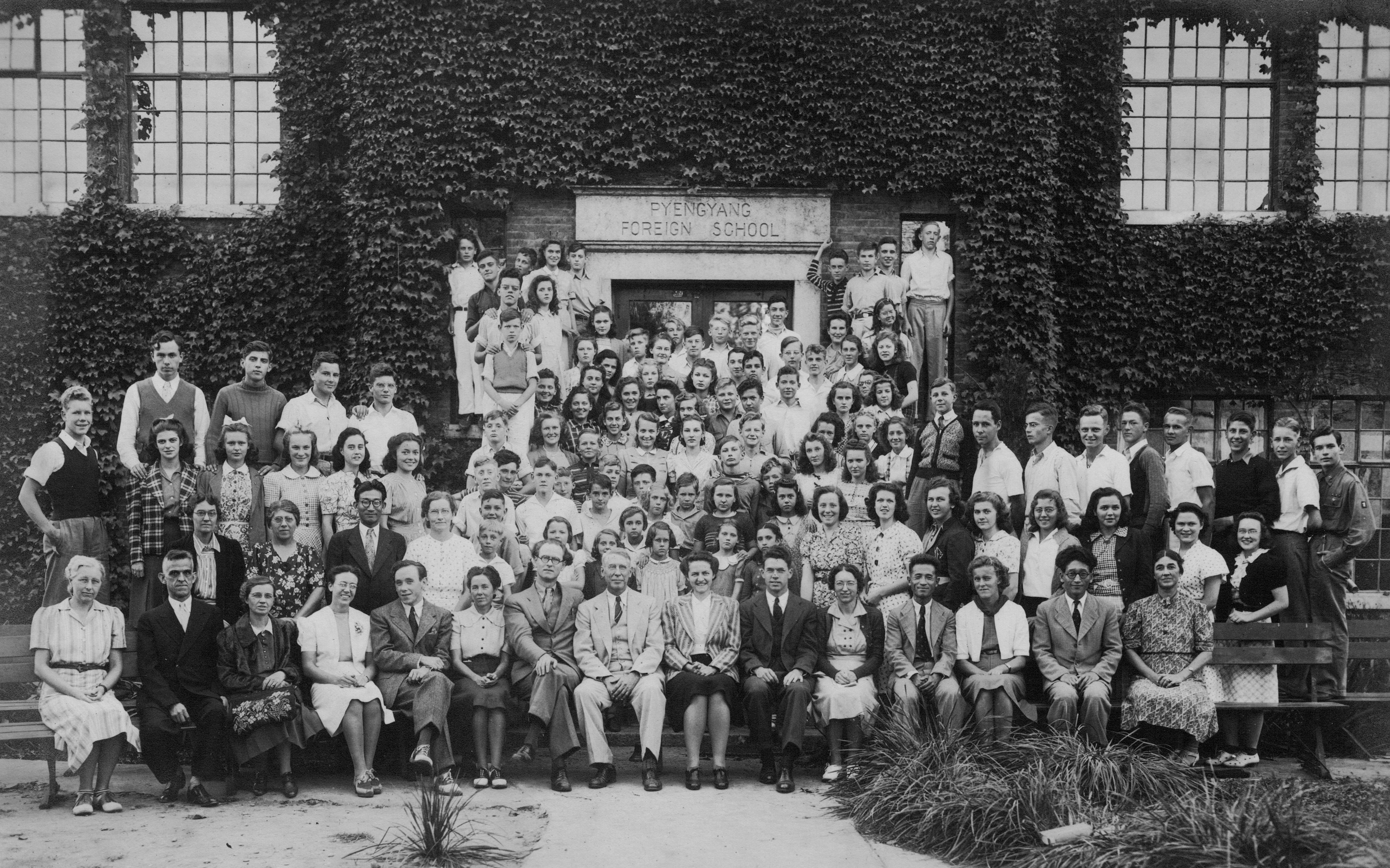
PyongYang Foreign School, about 1939
In our school we had Sunday morning and evening worship services in English. Attendance was not mandatory since this school admitted both business and missionary students. We had several Russian students, one Hungarian, but no Orientals.
Mr. Whang was my Science teacher, I took voice lessons from Mrs. Lutz, the choir was led by Miss Wolpert, and Miss Adams was in charge of the girls’ dormitory. I learned to ice skate that year, played some tennis and enjoyed the movies we saw on Saturday afternoons. Since the Japanese had conquered Korea at that time, we had to watch a Japanese movie also before we could watch the American one. It always seemed to be raining in the Japanese movies. The Samurai movies were exciting.
Summer came and I traveled back to Shanghai. This time I took a train to Fusan, then a ferryboat ride to Shimonoseki in Japan, then by train to Nagasaki where I took a Japanese boat sailing to Shanghai. I seem to have many memories of what I travelled, but I think one spends a lot of time on boats, trains and buses going from one place to another. Today it is all about planes or car travel.
That summer my parents “house-sat” for a couple spending a summer in the United States. This was a luxurious house in Shanghai, I suppose the most beautiful I’d ever lived in.
I also met many interesting people: the Director and his wife of the China Inland Mission, Mr. Hoste, and the British chief of Police and his wife, Dimples. I also heard Watchman Nee, Timothy Tzao and Andrew Gee speak. All three were outstanding Chinese pastors.
That summer my parents decided to send my sister Evey to Korea and she had dresses made for me while she lived in Hong Kong. They were beautiful.
We took a Japanese “Maru” boat back to school, and out tuition money was sewed in our jackets. I brought a caged canary with me to school, and when I graduated, I gave the canary to Mr. Whang.
The last year in Korea was the most interesting year of all my high school years. I met my future husband, Bill. He walked into the classroom and at once a thought came to me,” I wonder what he is going to mean in my life”. He didn’t look like anyone unusual. He was thin and tall but when he spoke he had a deep bass voice. He excelled in subjects I had never heard of: calculus and trigonometry.
I was asked to report on the Chapel messages given by the senior students, and these were published in our school paper. I was put in charge of Maypole festivities, which was a disaster since we couldn’t get the ribbons to crisscross correctly. I was given a part in the senior play, and was later called “Cutie-Pie” by the silly Junior boys because of the part I had acted in the “Ready-Made Family”.
When I got German Measles, I was sent to the infirmary and Bill got the mumps, so he and I exchanged notes to pass the time. Kanawan, the school nurse, baked the notes in an oven to kill the germs.
I wrote flattering notes, since I had a crush on his deep voice, his blue eyes and his height of six feet. He wrote notes addressed to “Cutie-Pie”, with a sketch of this bug.
He went out on dates with Fran, but I knew she still had a crush on the boyfriend who had gone back to the States. She needed dates and picked the one person she thought would go with her. She and Bill travelled back to the States on the same boat. There she met a boy from China, fell in love and eventually became Mrs. Kedar Bryan.
When Bill landed in San Francisco he telegraphed me and asked if he could stop by and visit me in Chicago. I thought, “Hooray!”
I went to my grandmother’s house in Chicago where I met Bill and we spent a few days together visiting the Zoo, the amusement park and ate in an Italian restaurant. When he left, he kissed me, and I thought I had died and gone to heaven.
Bill took a train to North Carolina and enrolled for the next two years in Davidson College. I went to Wheaton College that year. Doris graduated the following spring and Winnie came back from Simpson Bible School and worked for the mayor of Evanston as a nanny. Evey and Mother returned to the United States that autumn and Evey then finished high school in Wheaton.
The Japanese had interned the foreigners living in Shanghai. There were several camps, and my father was interned in the camp for missionaries. There was another camp for business people, and there is a book which describes life in that camp.
The missionaries were able to obtain a radio and listened to the BBC broadcasts, so they knew when the war had ended. The missionaries organized themselves and those who were teachers taught. Doctors and nurses kept the camp as clean as possible, and the missionaries took turns preaching on Sundays. My father told us that the food consisted of one meal a day. It was usually rice and something green, as well as hot tea. The soldiers who guarded them didn’t have anything else either, so no one complained in this camp. Everyone kept as busy as possible.
A Swedish ship, Gripsolm, was an exchange ship, and when they were released from this camp, they were exchanged for Japanese prisoners returning to Japan. The food on this ship was so rich many of the missionaries became sick. They had been warned not to eat too much at once, but it was a temptation to eat food that they had only dreamed of eating while in camp.
Mother met my father when he arrived in New York. She was shocked when she saw how much weight he had lost. He was amazed at all the changes that had taken place in America, and it took him several months before he adjusted. Mother and Father went to Pandora, Ohio. There, Mother owned a small piece of land owned by her parents. Father started to renovate the house, and built a small house on this land for my Aunt Edna (my mother’s sister) who had retired from her life as a nurse in the Belgian Congo.
WHEATON COLLEGE, ILLINOIS
I have digressed. After I left Korea, I attended Wheaton College. Mother, Evey, Doris and I rented a small apartment across the railroad tracks from the college. We had only one bedroom on the main floor; two of us slept there. We had also rented the attic in this house. It was hot in summer and cold in the winter. We had two single beds and a cot there, a very small kitchenette and no bathroom. We shared the downstairs bathroom with the couple who owned the house. They were Mr. and Mrs. Havlik. He smoked cigars.
We were grateful for a roof over our heads. Mother’s meager salary helped with the rent and the food. Doris worked for her tuition at the college, and I worked for a family on the weekends cleaning house. One of the sons played a violin and to this day one of Mendelssohn’s concertos reminds me of that place.
Grandma Amstutz often stayed with us. She stayed in Chicago sometimes with her son, Waldo and Mildred his wife. They had three children. Uncle Waldo worked for the Edison Company in Chicago, where he got both Evey and me a job in 1942.

Jonathan and Sarah Amstutz, about 1880
Grandma Amstutz had lost a farm, a store, and a home in Pandora during the Depression, so she cleaned house for people, took baby-sitting jobs, and cooked and cleaned while staying with her children. When I was a baby, Grandma took care of us for a period in China.
Grandma kept her money in her Bible. It usually was a $5.00 bill, or at the most $10.00. She was cheerful. I remember her reading her Bible or sometimes the Pandora Times. She made beautiful quilts. While we lived in New York Grandma and Mother made me a basket quilt.
In Wheaton I studied French, took music appreciation, English and European history. Dr. V.R. Edman taught our history class, with Hudson Armerding as the substitute teacher.
Dr. Edman and his first wife were missionaries in Ecuador under the Christian and Missionary Alliance. When she died, he needed money to bury her, but had none. He said that one morning, after praying for funds, he had a knock on his door. An old woman handed him an envelope and then turned and walked away. When Dr.Edman opened the envelope he found money to pay for the funeral and to bury his wife. He quickly looked down the street to speak to the old woman, but she had disappeared. He said he believed she was an angel.
Dr. Edman had several heart attacks. He spoke one day in Chapel at Wheaton and said, “This is the first time in more than ten months I have attempted to speak in public. But I want you to consider with me an invitation to visit a King.” In the middle of the message, he had a heart attack and entered into the presence of the King of Kings and Lord of Lords.
He had served as President of Wheaton College for 25 years and 2 years as Chancellor. He was my history teacher. You remembered his words when he spoke and he often said,” Be sure to finish what you start.” “Never quit”, and “Don’t doubt in the dark what God told you in the light.”
The summer of 1940 it was decided we would all attend Nyack Missionary College in Nyack, New York. Mother rented Groff Cottage on the campus. We would all be together again while my father was in the internment camp in Shanghai. Grandma Amstutz was with us.
Uncle John Thiessen drove us to Nyack. Nyack is a beautiful town on the banks of the Hudson River. Across the river are the towns of Tarrytown, Sleepy Hollow and the United States Military Academy at West Point. Washington Irving’s story, “The Legend of Sleepy Hollow” describes the life of the early Dutch settlers.
While studying at Nyack the four of us sisters formed a singing quartette. We had help from a neighbor, Mrs. Pfunstein, who arranged our music into a four-part harmony. We sang in both Chinese and English.
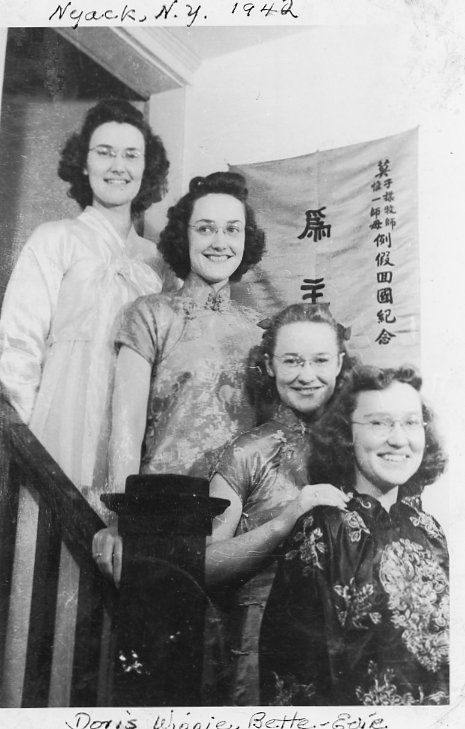
Winnie, Doris, Bette, Evey – Nyack, New York 1942
At Nyack I studied church history, child psychology, English and Christian ethics.
My teacher in Child Psychology got her PhD degree at Columbia University and once remarked,” You have never been taught to think.” She was right. Memorizing and repeating what I had read or heard came easily to me, but I could not solve problems. Dr. Mellis took us to psychiatric facilities. These visits made an indelible impression on me, and when I returned from a visit, I thanked the Lord for the mind He had given me.
WORLD WAR II
On the 7th of December, 1941 Japan bombed the American Fleet in Pearl Harbor, Hawaii. The United States declared war on Japan and began drafting men for military service.
Eugene Linton (Bill’s brother) joined the army, although he was studying to be a doctor and did not have to enlist. Bill Linton joined the Marine Corps and was sent to Boulder, Colorado where he received training as a Japanese Language Translator. The third son of the Linton’s, Hugh, joined the Navy. Dwight was too young to enlist.

Bill Linton, Age 21, US Marine Corps
While I was studying in New York, Bill and I had been corresponding and he wrote me after he had enlisted that he wanted to visit me before leaving for Colorado.
We had moved from Nyack to Chicago in June of ’41. Doris wanted to get a job in Chicago, and Evey and I didn’t want to continue our studies at Nyack. Only Winnie wanted to graduate from Nyack, which she did two years later. Nyack was a good place to be, but I wanted to begin earning money in order to provide all of us with better food and clothes.
My Uncle Waldo found jobs for Evey and me at the Commonwealth Edison Company and Doris worked for a Christian Publishing House.
I worked in the Safety and Training Division of the company, where I was supposed to answer the phone when an emergency occurred in the field. The linesmen called in if someone had been injured, but since there were very few emergency calls, I mainly just sat across the desk from my supervisor and we stared at each other. Eventually, I helped deliver mail in the department, or was asked to pay the bills the men in the department had to pay. This involved taking a streetcar or walking several blocks to the nearby department stores, or utility companies.
The girls in the department asked me why I did not join the typing pool, but I did not think I could qualify since I had not been near a typewriter for four years. I also did not think I would remember my shorthand, but even to this day I remember quite a bit of it. Years later in Maryland I took a job as a secretary and used my shorthand every day.
One of the girls I met at the Edison Company loaned me her bridal veil when I got married.
In Chicago we had found an apartment on Juneway Terrace, about two blocks from Lake Michigan. We took an elevated train to our work downtown.
Just after Christmas Bill took a train from Boulder, Colorado to Chicago. He visited me in our Juneway apartment, and after dinner that evening, he proposed and I accepted. We planned a June wedding, but later changed that to May because of his finals at school.
Bill gave me a diamond ring later because the ring had not arrived from Tiffany’s the night he proposed. The diamond had been taken from an antique brooch Mother Linton had received from her mother. The brooch had been given in payment for a debt someone owed Great-grandma Bell. I saw it before the diamonds had been removed and given to the other sons, and it was a very beautiful piece of jewelry.
We were married the 23rd of May 1943 in Boulder’s Presbyterian church, and Bill’s father married us. The reception was simple – just chocolate ice cream and a wedding cake. It rained the whole day, so in the film of movie camera Father Linton used to take our pictures, everyone seems to be rushing from the church to the cars under umbrellas and I don’t think Bill and I had a single wedding picture we wanted to save. The film was lost, anyway. I only saw it once and was disappointed.
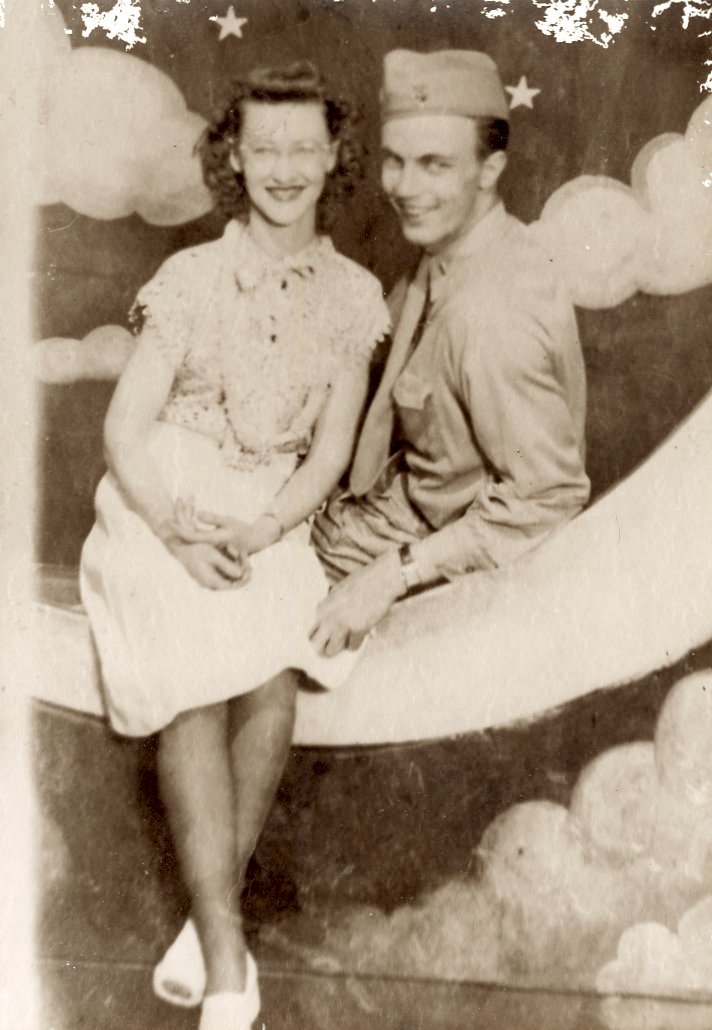
Bill and Bette married May 1943
During the year we were in Colorado we lived in a tiny apartment just off the campus. We bought a Cocker Spaniel, but it died of distemper. We also picked up a kitten, but it also got distemper and died. I began to wonder if we were able to keep anything alive.
We walked to town nearly every Saturday night and saw Western movies. We sometimes ate out. We went to Loveland one weekend as our “honeymoon”, and the setting sun gave me a severe sunburn on the back of my legs.
On the 15th of February, Charlene Evelyn Linton was born, but she had colic for the first three months and a very inexperienced mother who thought that babies slept, ate, and cooed.
After graduation Bill drove us in the Model A Ford coupe as far as Lincoln, Nebraska. There the car broke down, so we took a train to Nashville, Tennessee, where Bill’s parent were living. A few weeks later Bill got orders to go to Quantico, Virginia, so he bought another car and we drove there where Bill took his basic training as a Marine.
He visited us on weekends, and I believe we were there about 6 weeks. I had to walk into town to buy groceries and anything I needed for Charlene, who was about 4 months old at that time.
I left Charlene with Bill’s parents and Bill and I drove to San Francisco where he would be shipped overseas. We stayed at the St. Francis hotel, and Bill’s mother gave me money to buy a suit. I bought a lavender wool suit and wore it every Sunday. Bill was sent to the Palau Islands, and I didn’t hear from him for over a month at first. When I did hear from him and he could tell me where he was, I was able to locate the islands in the Pacific on a large map I had received in a National Geographic Magazine. I pinned the map up on the wall in my kitchen in the apartment I rented on Juneway Terrace in Chicago.
My parents had asked the landlord to save this apartment for me. It was just a floor below my parents’ apartment.
Soon after Bill left, I discovered I was pregnant again. Patricia Bell Linton was born on the 2nd of April, 1945 in the Evanston hospital. I was attending the evening Easter services at a nearby church when I noticed my contractions. There was a clock on the wall, and I was able to see how often they occurred.
She was born a couple of hours after Easter Sunday and the doctor was not pleased to have to come in on that day. To him that day should have been a special holiday for everyone. She missed her father’s birthday by a few hours.
Patty was a good baby and this time I was a more experienced mother. Also, Grandma Jacobson lived above us and gave advice and help.
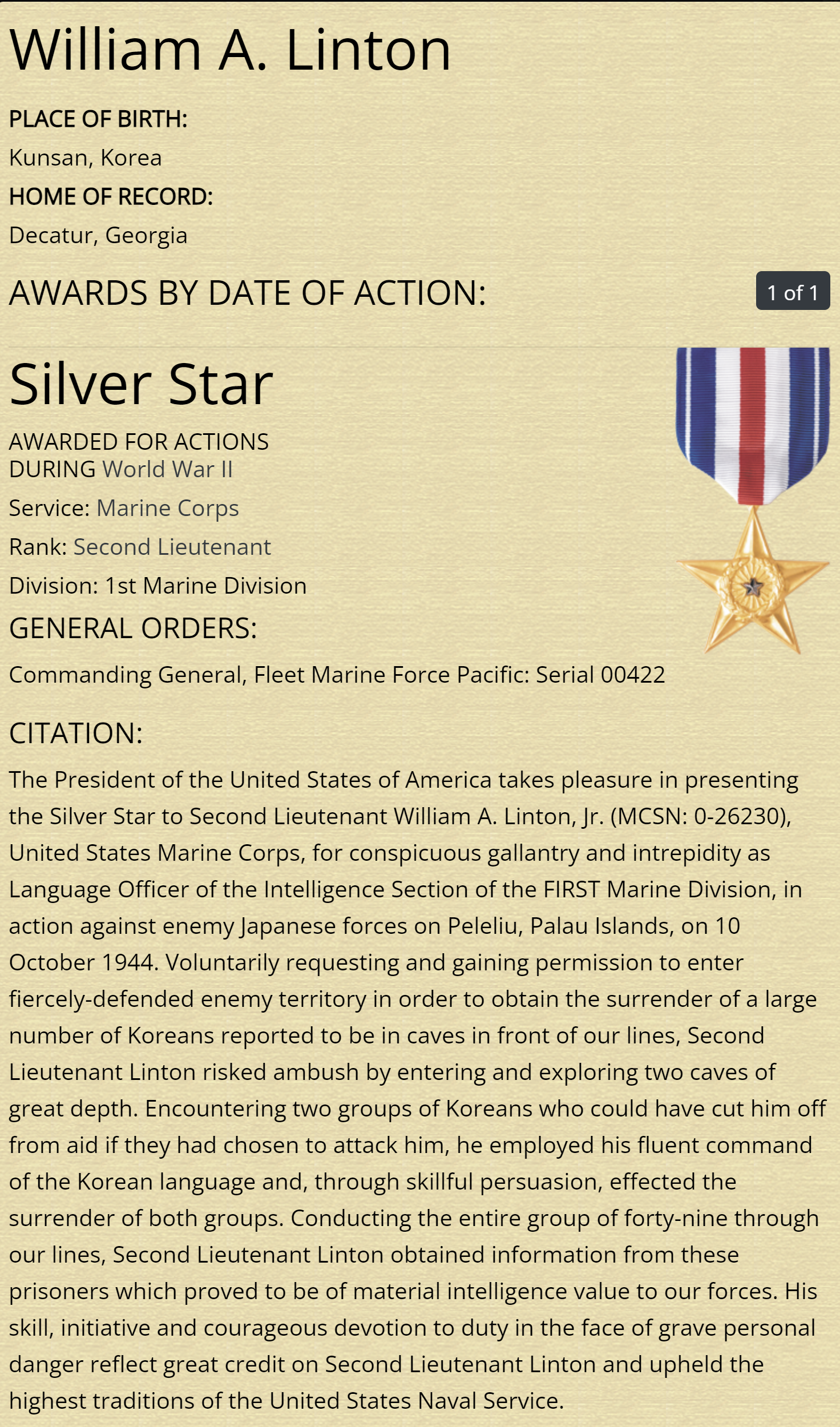
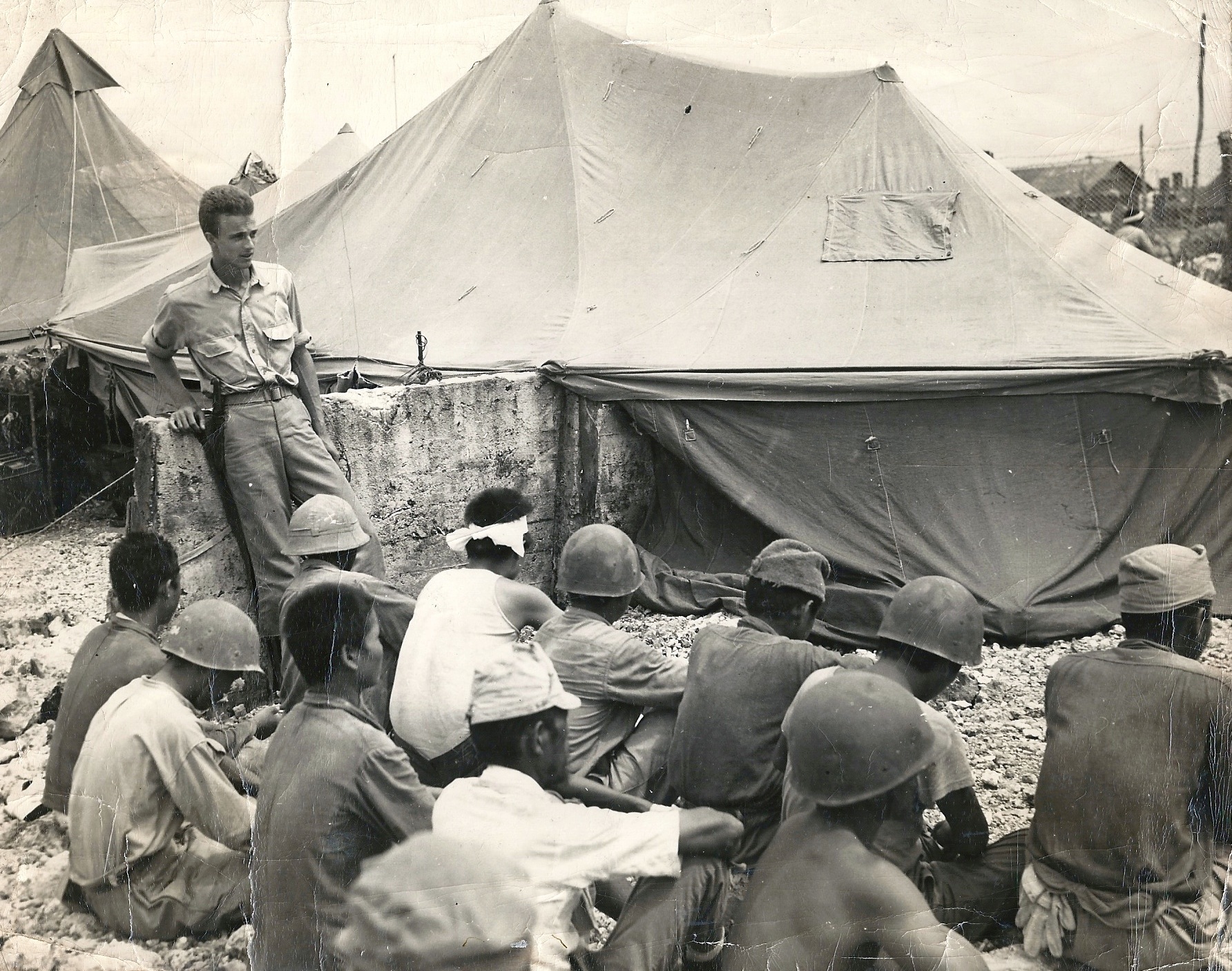
Bill returned from the Pacific in 1946. He had received a Silver Star for capturing 49 prisoners on the island of Peleliu. These prisoners were Koreans and were hiding in a cave. Bill was able to persuade them to come out. He spoke Korean to them and discovered one of the men had attended his father’s school in Korea. This led them all to surrender to Bill. He did not carry a weapon except a knife in his boot.
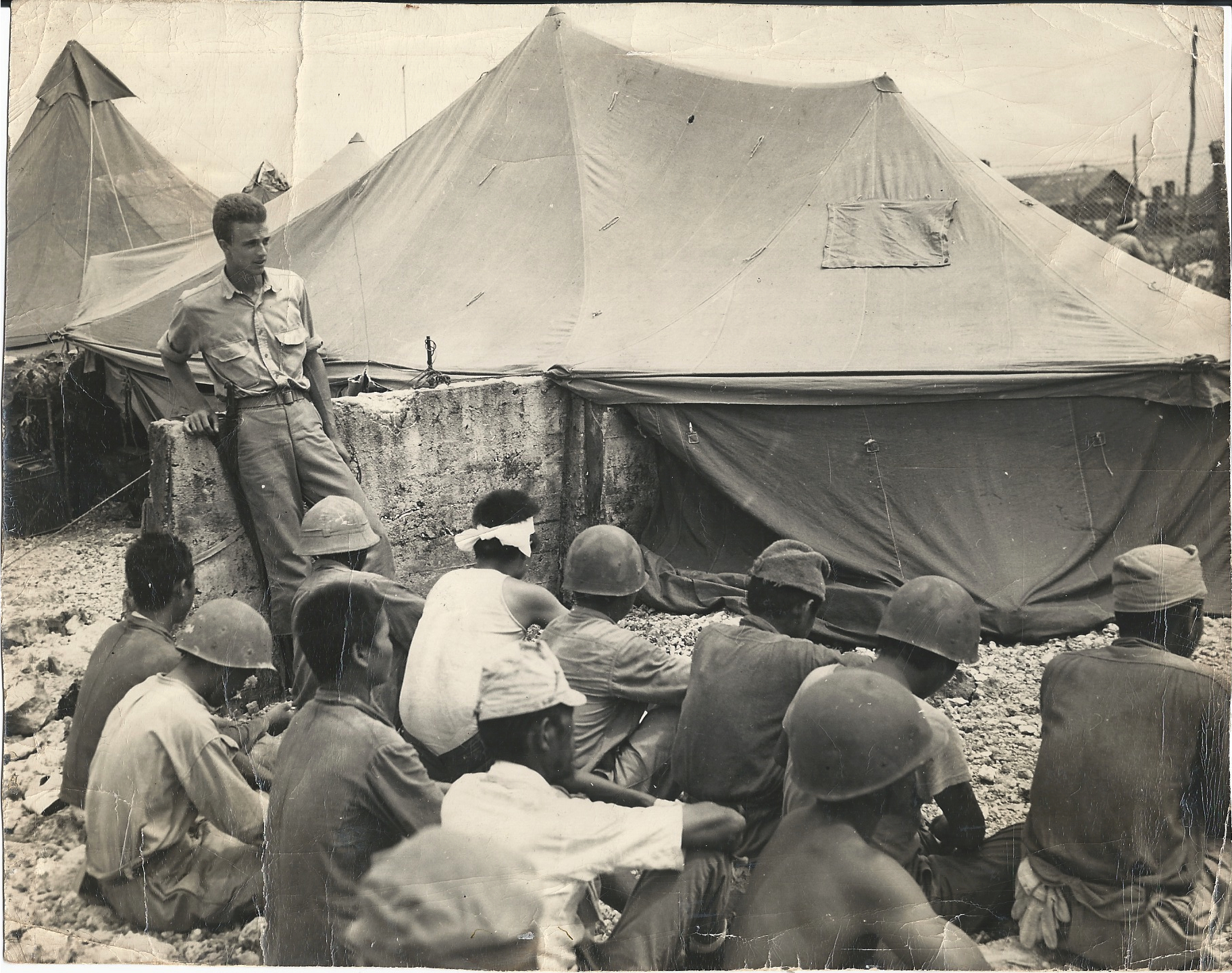
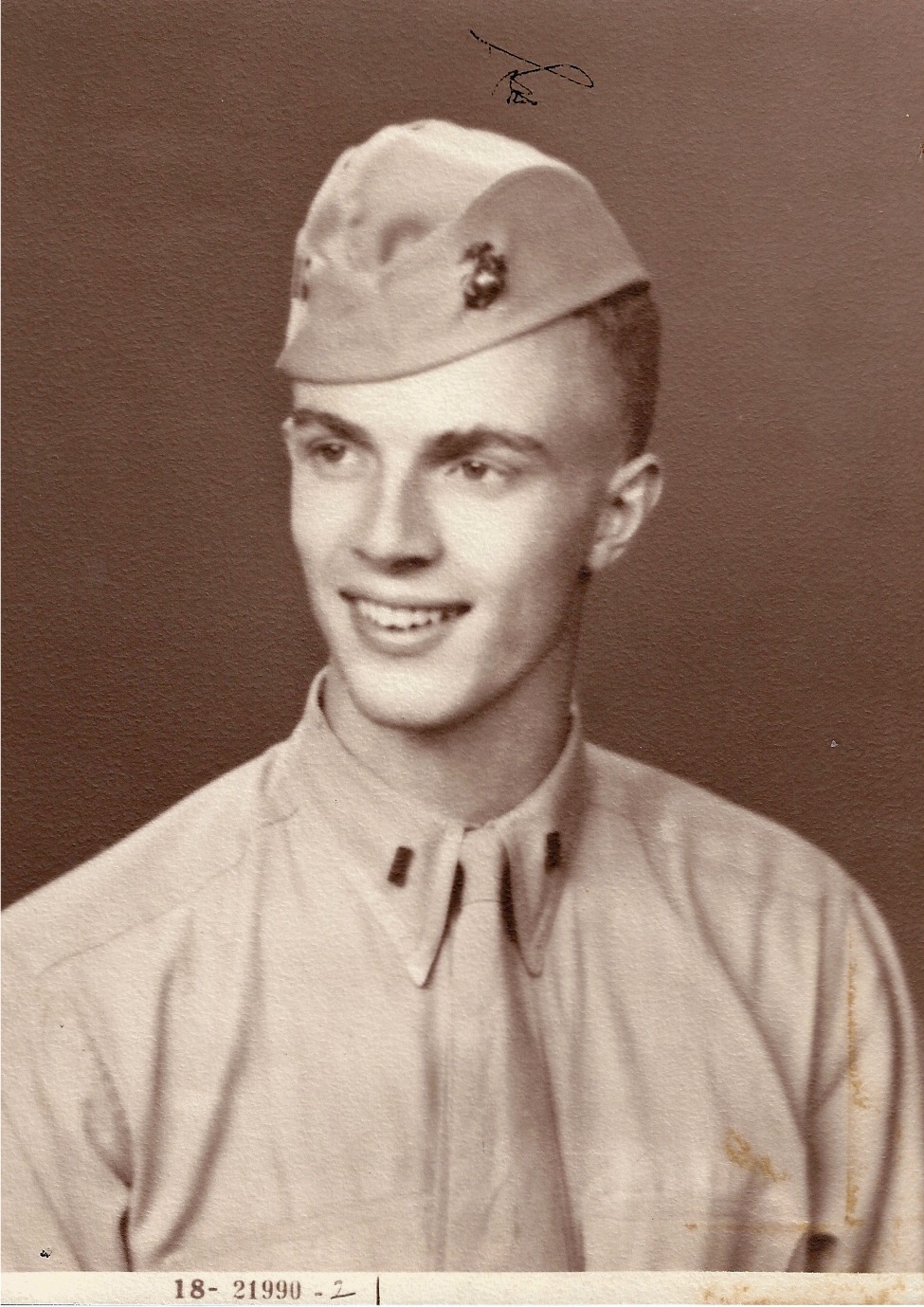
Bill Linton, 2nd Lieutenant, US Marines October 1944
Bill said later that he had difficulty obtaining food from the Marine Corps for the prisoners, since food was scarce for everyone.
After the war, we settled in Decatur, Georgia. Bill started a car repair shop, which he called “The Car Clinic”. He built a small cinder block building and had two friends from Korea help him. The business was not successful and after about a year he took advantage of the GI Bill and enrolled at Emory University where he graduated in 1950.
By that time we had three boys, Billy, Johnny and Gerry.

Linton Family, North Carolina about 1960. Bette is far left with glasses.
After graduating from Emory University with a degree in Engineering, Bill was hired by Dow Chemical in Midland, Michigan. I should mention that while driving to Michigan from Georgia, Billy lost his doll Martha. She was a purple chenille doll, and he opened the back window so she could see the passing landscape. The wind whipped the doll from his hand, and he never saw her again.;
Bill found a house in the city near the elementary school, and our two oldest children attended this school.
After a year in the city house, we moved to a country house where we had a large back yard. On Sundays we attended a Dutch Reformed church. The pastor was inspiring and challenging and once preached a sermon about heaven. He warned us that no one should presume to arrive there unless one was “bidden”. He meant that taking one’s own life was not acceptable.
Dow was not fulfilling for Bill. We left Michigan when Bill found a job with the Presbyterian Junior College in Maxton, North Carolina.
That year we lived on a very meager salary, but we did not have to pay rent for the house we lived in. I think one called these houses “shot-gun” houses. One could see the back door when one opened the front door, and all the rooms were either to the right or the left of the main hallway.
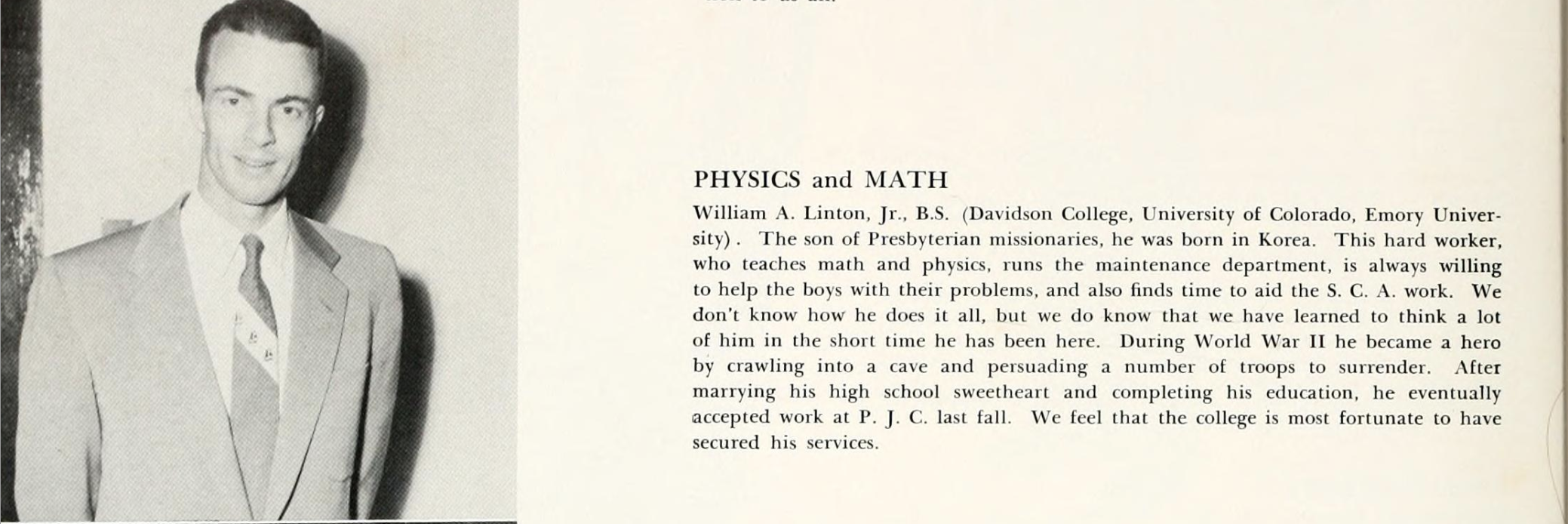
Bill taught physics and math in the college, and I took care of the children at home. I learned to drive a car that year. Bill could walk to the college, and I wanted to take the children swimming in the river at an abandoned Air Base. I didn’t get my driver’s license until we moved to Rockville, but I drove on the back country roads and very slowly.
We attended the local Presbyterian Church, and I met a godly woman who had been a missionary to Korea. She was called “Miss L’il”. She introduced me to the Amy Carmichael books and she was one of my dearest friends.
I taught a Bible Class for women, and I hope no one remembers the classes. I don’t remember the names of the women in the class, and I am certain that I was not a good teacher.
When Bill decided to look for a job in the D.C. area, he found work with the Naval Ordnance Lab in Washington, D.C. We drove from Maxton to Rockville, where he had rented a house in Twinbrook, a suburb of Rockville. Bill found a house near the local elementary school and all the children enrolled in this school except Gerry. We rented a U-Haul trailer to move our furniture and beds from Maxton. Bill made three trips with this trailer.
Again, Bill’s work was not what he wanted, so he joined a company in Virginia, but we stayed in Twinbrook for several years, first on LeMay St and after 2 years, Carl Street.Eventually, we looked for a country house and moved to Gaithersburg (near Laytonsville) Maryland in 1957, and Bill started his own electronics company.
We attended a Presbyterian Church at first, but the pastor did not want me to teach the students in my Sunday School class a verse in the Teacher’s Manual. He thought I should know that it was not appropriate to have them learn, ”..we have turned everyone to his own way, and the Lord has laid on Him the iniquity of us all”. He believed children were too young to be taught they were “sinners” in God’s eyes. God is love and Jesus cares for us was all they needed to know.
We joined another church but left that too. The church was sending small amounts of money to missionaries each month. The pastor wanted me to write to these missionaries to find out if they supported Billy Graham. He’d heard that Billy Graham had allowed liberal pastors to pray or read Scripture in his services, and he felt this was wrong.
Derwood, near Gaithersburg, had a Bible Church, and the pastor was a professor at the Washington Bible College. He was an outstanding Bible teacher, and the first time I heard him, his text was Philippians 2:5-11. An unforgettable memory. I told the family that I was going to the church where Homer Heater was preaching, and anyone who wanted to come with me could do so, and if anyone didn’t that was fine with me.
We started out each Sunday going to two churches, but eventually we all joined the Derwood Bible Church, which wasn’t far from our house in the country.
In Gaithersburg we lived in a house at the end of an unpaved driveway. There was a small pond at the back of the property, a tall tree in the front yard where I nailed a pair of shoes going up the trunk of the tree. I bought chickens, 2 ducks and someone gave us a pair of Toulouse geese. Billy bought a Jersey calf, Charlene had a Siamese cat, Patty had a Boston Terrier puppy, and worked one summer to buy a Tennessee Walking horse.
I loved Maryland. I told the children that when I died I wanted to be buried under the willow tree in the backyard. God had other plans for me, however.
Bill started a business making power supplies and sometimes I worked as a clerk-typist, answered phones and did his filing. Eventually he was able to hire a competent older woman, but I began to have confidence in my ability to work in an office. I found work at NASA in Greenbelt, Maryland, but as this was a long drive from home, I found something in Rockville. I worked for the Parole and Probation Board of Montgomery County, and also for Bechtel. My favorite job was with a company in Bethesda. They promoted the sale of Chilly Billy Ice. Xerox had opened a large plant in Gaithersburg and I worked for them until 1971.
When Bill was asked by a company in Germany to make power supplies for them, he started to learn German by using tapes. Bill left for Germany before Christmas in 1970 and stayed there for several months.
In the spring of 1971 we received a call from Charlene’s husband, Gary Volz, in Texas. He told us that Charlene had passed away and asked that we would come for her funeral. Gary worked for Exxon, in Houston.
We drove to Texas and along the way a verse of Scripture came to my mind..”And when I awake, I shall see Him face to face”. Later while we were passing fields and trees the poem I had learned as a young person came to my mind. It was Alfred Lord Tennyson’s poem, “Crossing the bar” and the last line goes like this, “I hope to see my Pilot face to face, when I have crossed the bar.” Then I also remembered a hymn, “Face to face with Christ my Savior…when with rapture I behold Him, Jesus Christ, who died for me.”
When we returned to Maryland after the funeral the congregation sang, ” And I shall see Him face to face.” Those three words “face to face” were the Lord’s promise and comfort to me during this time of intense sorrow. I knew my daughter saw her Savior when she awoke.
Our son John was working for a German company making a laser instrument which could pinpoint exact measurements across ravines, passes or bridges. They needed a power supply for the laser, so John told the CEO Herr Stube that his dad made the best power supplies in the world. So that was why Bill and I left for Germany the summer of 1971. I should mention that Pat and her husband Dave were in British Columbia, Canada as missionaries to the North American Indians living there. Gerry, our youngest son was in the Marine Corps stationed on Okinawa and Billy (now we called him Bill) was living in Wisconsin with his son, Micah.
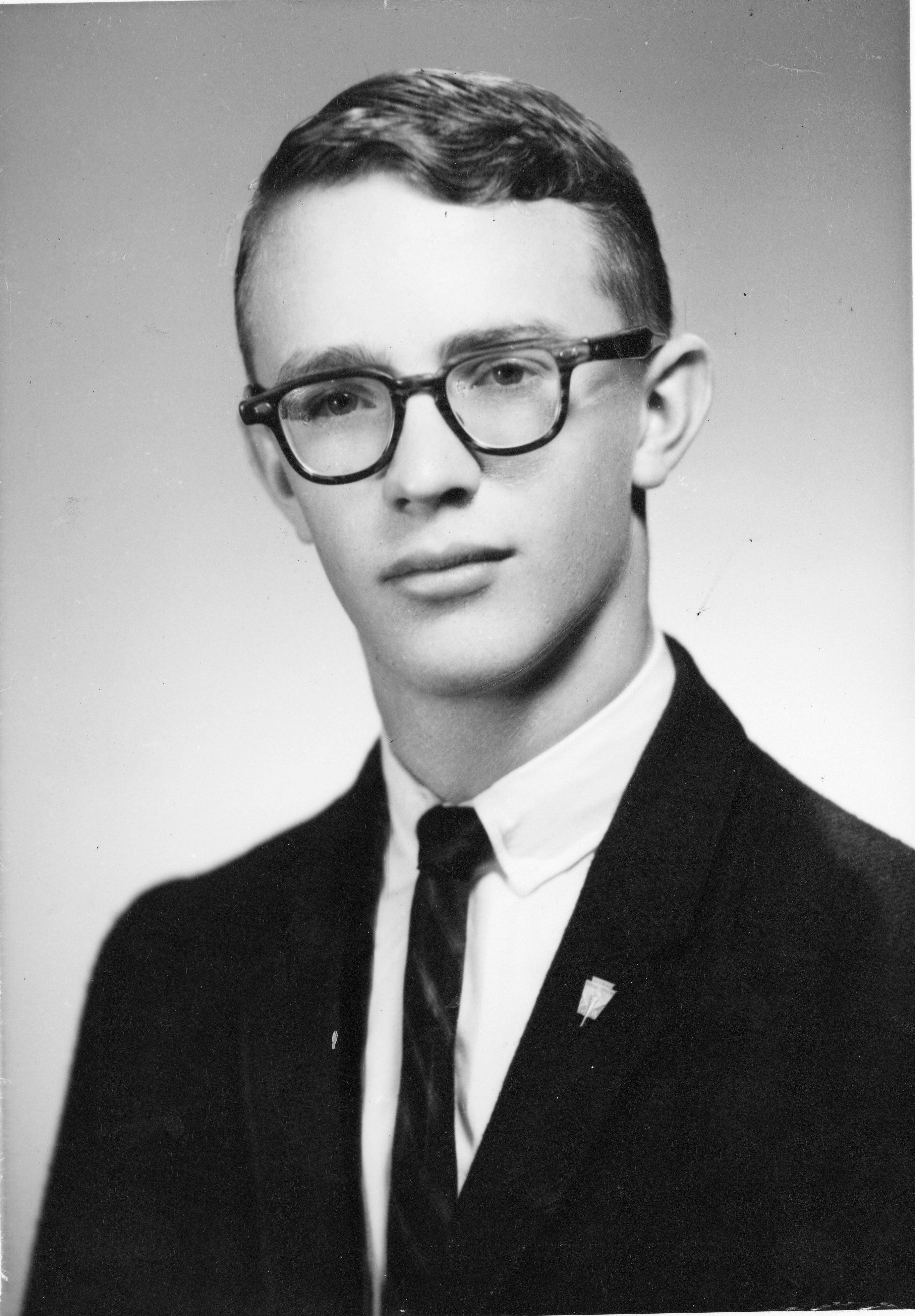
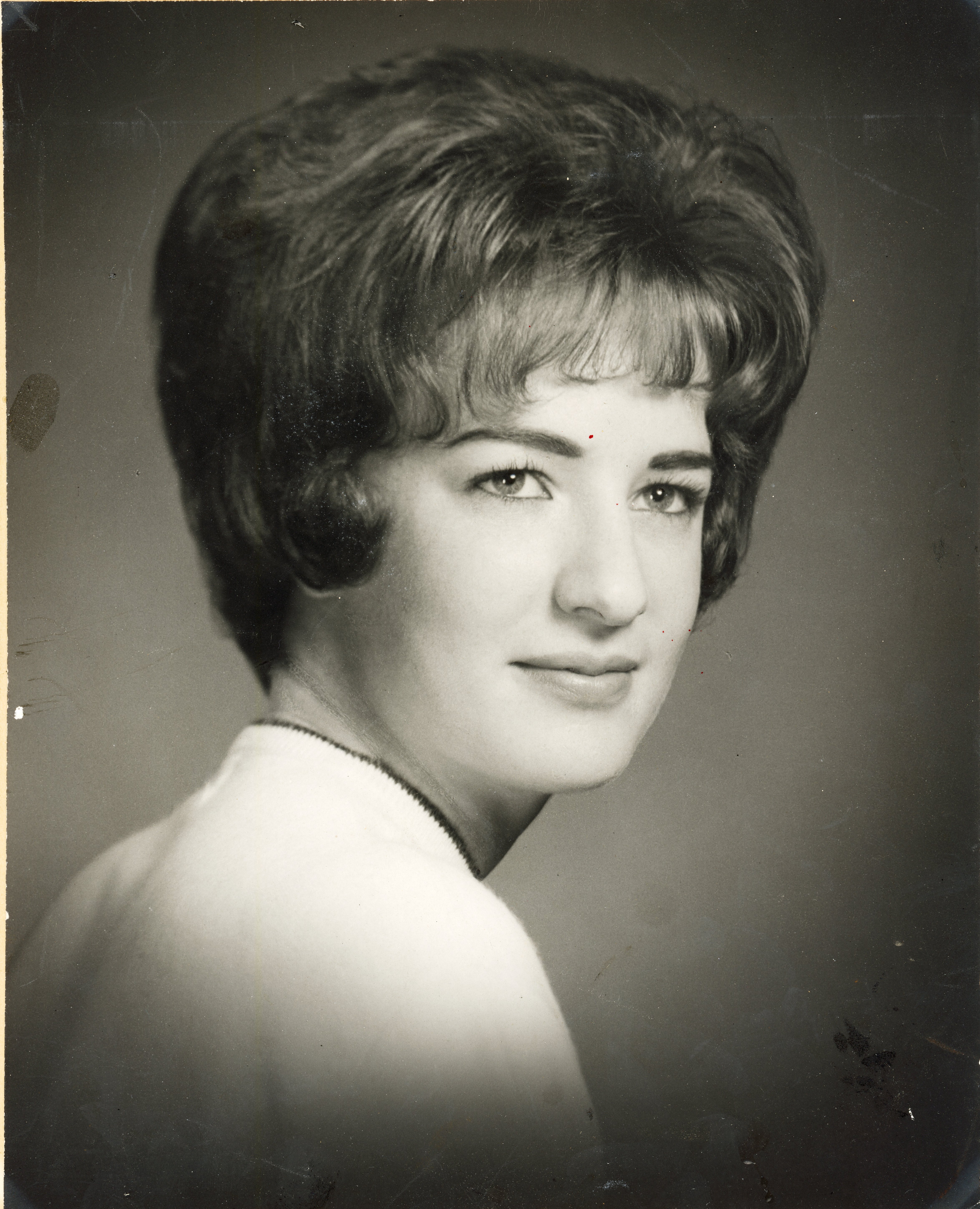

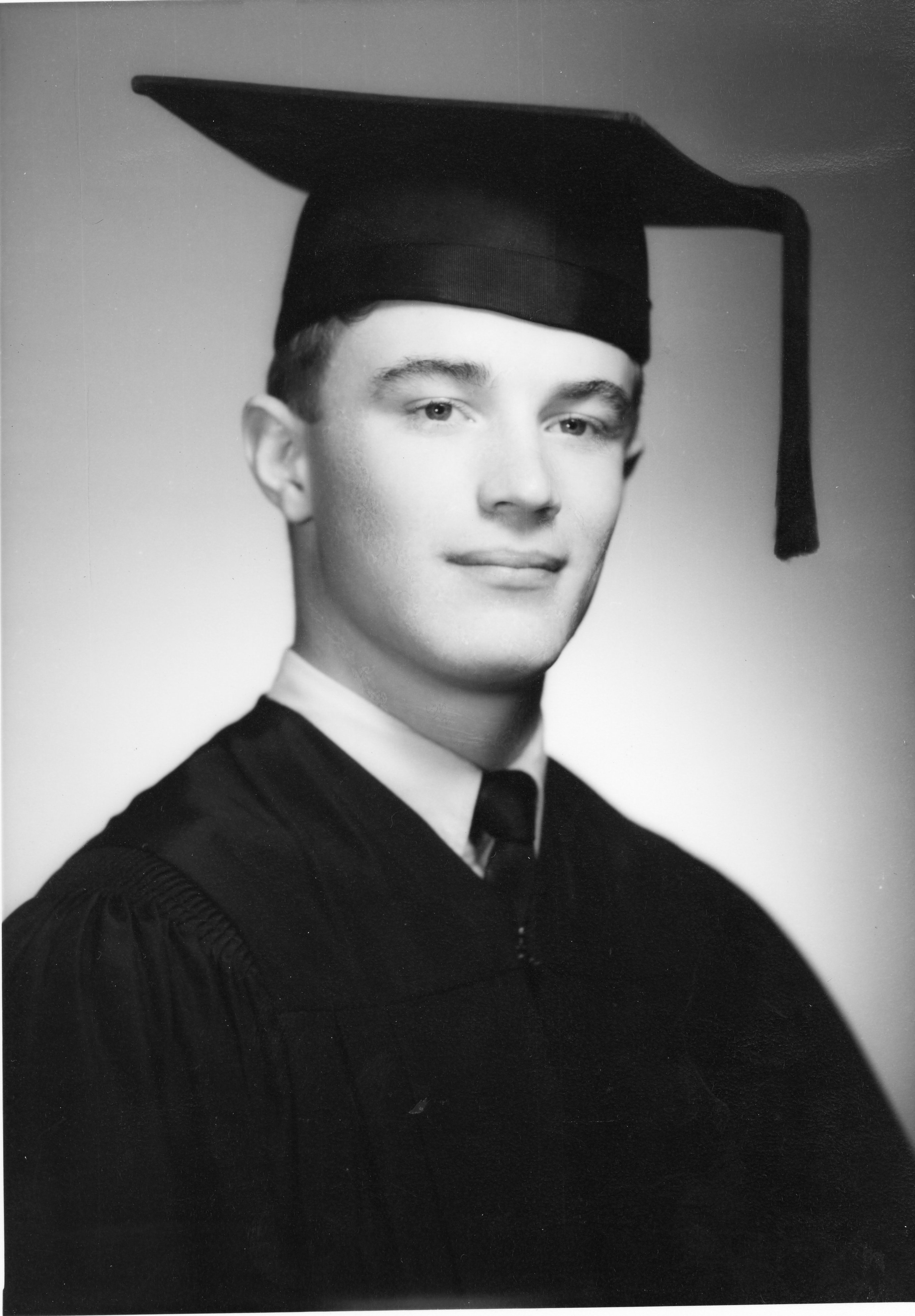
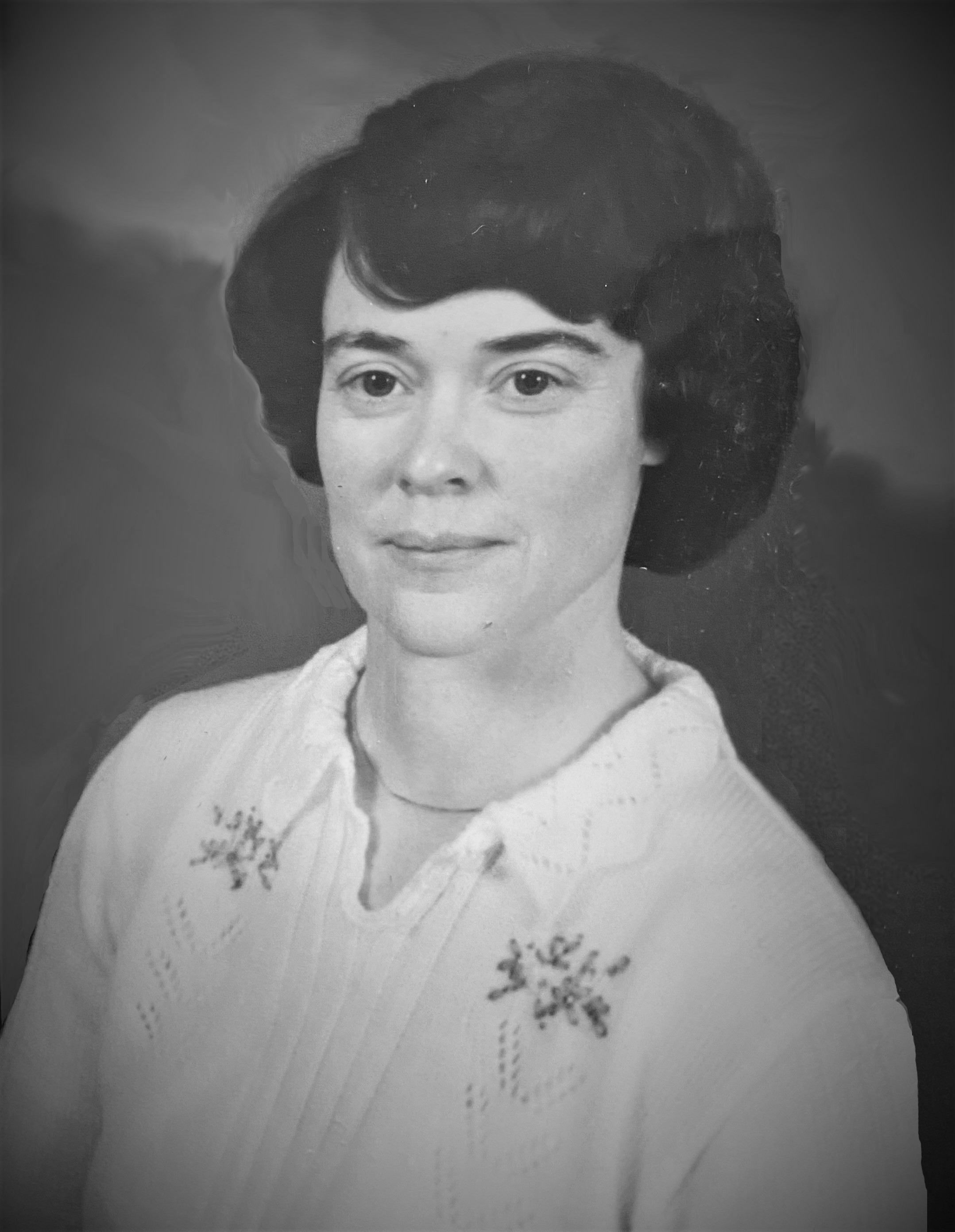
The five children of Bette and Bill Linton
UNDER A SWISS FLAG
During the months of June and July, Bill and I lived in an apartment in Herford, Germany. I took a bus into town and shopped in stores where only German was spoken. I once had to leave in frustration because I couldn’t get the woman to understand the brand of coffee I wanted to buy. My German was limited to thank you, goodbye, good morning and good evening. I could count up to ten in German. I tried to speak to our landlady but could only answer her questions with a word or two. I could also say, yes, no and please.
My Grandmother Amstutz and Mother spoke Swiss German at home when they didn’t want us to know what they were talking about. Uncle John said their German was a “disease of the throat”.
When we left for Germany my Mother had already passed away. My Father was living in Florida next door to his sister, Judith, and her husband.
The German company moved to Monthey, Switzerland in order to put their money in a Swiss bank and avoid German taxes. We had to follow, and rented an apartment which faced the well-known mountains, “Les Dent du Midi”. One morning as I was sweeping the kitchen floor I heard an airplane overhead. Looking up I could see the snowy peaks of the Dent du Midi, and I spoke to the Lord. “You have moved me from our home in Maryland, but if you want us to live here in Switzerland, I have to see those mountains from my living room.” The cobalt blue sky and the snowy mountains seemed to me a paradise on earth. Five years later the Lord answered that prayer in an amazing way.
The Lord is always faithful and lavish in His blessings to His children.
There was a large shopping center in the middle of Monthey. Bill went there one morning to buy a pair of pants. The owner, Wilfred Stoop, spoke fluent English and asked Bill what he was looking for and soon was able to give Bill just what he wanted. Then Bill told him we were looking for an apartment since the place we were staying could only be used for a few weeks. Mr. Stoop was delighted to tell him of an apartment located next door to him and his wife, Jocelyn.
So we rented that new apartment and became good friends with the Stoops.
Bill worked for the Laser Licht Company for about two years and then the German company moved back to Germany. We stayed on in Monthey as we had begun to make emergency lights for a Geneva company.
We attended a church across the valley in the Canton of Vaud. We had been able to get Swiss permits to live and work in Switzerland, so that wherever we were located in the country we could obtain work.
There was an American family that had settled in Huemoz and we attended the church located there. Mrs. Schaeffer has written a fascinating story of how the Lord led them to this village and how miraculously Dr. and Mrs. Schaeffer were used in many ways to establish a church and a place of refuge for many young Americans. We visited L’Abri, and came to know the family well. If you have never read the book “L’Abri”, you should try to get a copy.
We became members of the church, and one morning when I was attending Edith Schaeffer’s Prayer Meeting she prayed,” Please make it possible for the Lintons to live here in the mountains.” In my mind I said, “No way!” But her prayer was answered.
The first home the Schaeffers lived in was Les Melezes in Huemoz. During the early 1960’s young people from America visited Europe and India trying to “find themselves”. The Schaeffers opened up their home and the hippies were soon taking advantage of the free room and board they provided. The Swiss authorities objected to their long hair, guitars and their lack of manners or knowledge of the culture. The Schaeffers were asked to limit the numbers of the guests sleeping on the floors in the chalet. And they did so.
Meanwhile, the company we were supplying the emergency lights for went bankrupt and the business collapsed. We owed money to companies who had supplied us with the materials needed to make the lights, so we were closed down by the Swiss Office de Fiat in Aigle. Bill was out of work, we had no way to pay back all that we owed, nor could we pay for our rent, gas to run the car nor food to eat.
We moved out of the luxurious apartment in Monthey and moved into an old watch factory apartment in the village of Vionnaz. Bill was making power supplies for another company for a short time and later our son, Gerry joined us and worked with his dad.
Bill called his company Lintech. God had his plans for our lives at this time, so when the Schaeffers needed someone to help them during the “How Shall We Then Live” filming and they asked Bill to help, he consented. We needed the money to live, and Lintech was not providing it.
Bill worked for the Schaeffers for several months and I worked as Frankie Schaeffer’s secretary in Chesieres. There is a British school located in Chesieres, a village located next to Villars, which is a ski resort. The Schaeffers now lived in Villars, but the work in Huemoz continued. I think they moved to Villars for privacy reasons. The work in Huemoz had become so well known, that they required a quieter place to live.
One day the Head Master’s secretary, Mary Newell visited the office where I was working for Frankie. She asked if I would be willing to type some letters for the school, as she was not able to do so. Since I was not too busy, I told her I would. Later she offered me a job with the school, but I told her that I had already promised to work for one year for the school for handicapped children in Huemoz. They had asked me to cook for them for one year. So I became chief cook and bottle-washer that year! After that year I decided I would never cook for a mass of people again. I learned a lot, too!
Eventually the British School needed a Math and Physics teacher, so Bill was asked to fill this vacancy. One day he told me that he thought we should move closer to the school. He was told by the banker at the Bank Cantonal Vaudoise that there was a place to rent or buy near Aiglon. He was given the address of Chalet La Godille. When Bill decided that we would rent it, he was told by the family who owned it that he would have to buy, because the man who owned it had become bankrupt and had just had a stroke.
How could we afford an expensive Swiss chalet? We had about Fr.300 in the bank. Well, the banker thought he could work something out…both Bill and I were employed by this time at Aiglon and we could take out several mortgages. When the time came for Bill to sign the mortgage he discovered that he needed a large down-payment to seal the deal. That was not a remote possibility.
He was in the “Teacher’s Lounge” one morning looking very sad and one of the teachers asked him what the matter was. He told her and she replied, “Well I have some money I do not want to take to England, so if you will allow me to have a room in your chalet where I can come every summer, I will be willing to let you have it as your down-payment.”
The teacher visited the chalet and chose one of the upstairs bedrooms, went to the bank, paid the down-payment and voila! We now owned Chalet La Godille and just down the hill below us the Schaeffers lived.
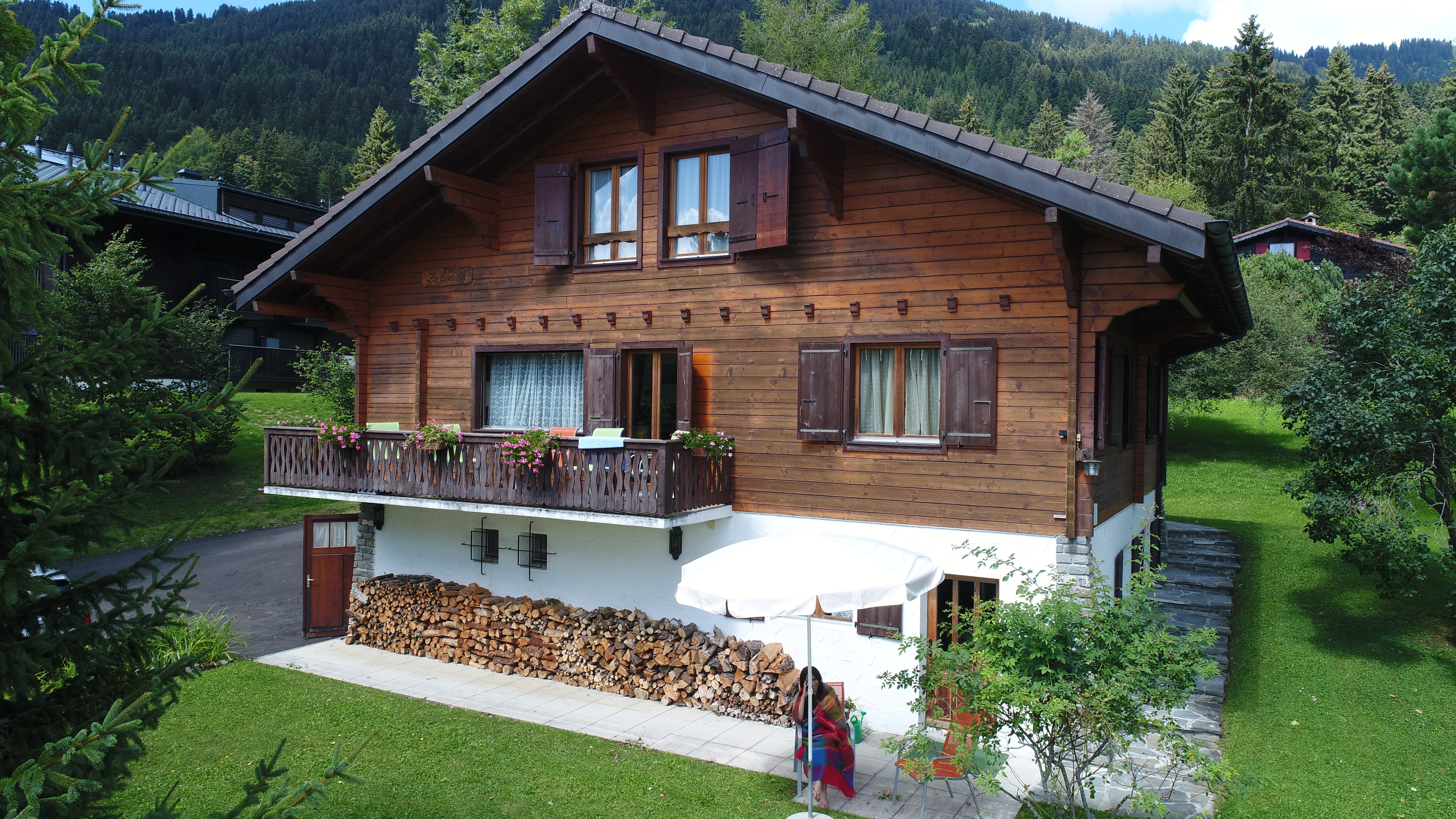
I should mention that the teacher who bought the room was able to visit only twice. The banker suggested we buy back the room, as she was unable to come. We were able to do so two years later.
I walked into the chalet for the first time and saw the ugly green furniture, the equally ugly grey rug and the flowery green and yellow cotton curtains hanging from the windows and thought, “What a terrible place to live.”
But I looked out of the large picture window, and Bill asked,” Do you see those mountain peaks?” The Dent du Midi! And I thought of the prayer I had prayed five years before and was amazed that God had answered my prayer that summer morning.
Many wonderful events happened while we lived in Chesieres. We were able to pay off the Office de Fiat, we were able to buy a car again, and we both enjoyed our work at Aiglon. I met many interesting people whose children were studying at Aiglon. We spent holidays in Spain, Italy, Germany, and France.
As Admission Secretary we admitted only a certain number from each country. Thus, we did not have only British and American students, but Iranians, Russians, French, Germans, Italians and students from the Arab countries. Some came from very wealthy homes, diplomatic backgrounds, the military, and those from countries where they felt safe at Aiglon. The children of movie stars were enrolled in the school, as well as children of Sheiks and Emirs.
One summer Bill and I were given a house located in Marbella, Spain. We were told the contents of the refrigerator were ours, as well as anything else in the house we might need. Never can I forget the magical hours spent near the beach. We learned that the Spanish take a long siesta during the noon hours and then the dinner hour is around 8:00p, or maybe even 9:00p. For us that was a huge change. In Switzerland the dinner hour is usually around 7:00 p.m. Here in the States 6:00 o’clock is usually dinner time.
That first summer we traveled around Switzerland because we were paying off the creditors in Monthey. We visited most of the Swiss castles, took ferry boat rides on Lac Leman, hiked the mountain trails, and took trips to the highest mountains: Mont Blanc, the Jung Frau and the Matterhorn.
Sunday evenings at 6:00 Bill and Jamie Jamieson took turns preaching in the English church, and Sunday mornings we drove to Leysin and Bill preached in the Swiss Reformed Church to the students and staff members of the American School.
On Wednesday evenings we had a Bible study in our chalet. It was the people from this study group who started the services again in the English church. Services had been discontinued when attendance had dropped.
After seven years working for Aiglon, Bill told me one afternoon that he had resigned for both of us. He wanted to start his own business selling solar panels and making power supplies again. After a few small contracts he landed a lucrative one setting up a three-mile solar panel installation using Kyocera panels from Japan.
In the summer of 1993, Bill was told by a doctor that he had a tumor on his brain. It was removed at the CHUV (cantonal hospital) in Lausanne. We celebrated our 50th year of marriage in Stoughton, Wisconsin and Pat and Dave celebrated their 25th year. It was also a family reunion with children, grandchildren and their aunts and uncles. Unforgettable days.
When we returned to Switzerland Bill learned another tumor had grown in his brain and this tumor was inoperable. On the 19th of February 1994 Bill passed away. The last thing he said to me was,” I am going home.” I told him he was home already.
Bill, John and Pat came to Switzerland for the funeral. Bill was cremated and his ashes as well as Gerry’s were put under the pine tree in our backyard. Gerry had died in a car crash in Wisconsin in 1986. For one year I lived in the chalet, but then Bill asked me to live with him and his two children, Jonathan and Kristen in Shorewood, Wisconsin. The chalet in Switzerland now belonged to Bill, who later, for financial reasons related to extensive repairs to the chalet, bought out John and Pat. The chalet has remained available to all the children and their children.
LIVING UNDER THE RED WHITE AND BLUE
Pat called me while I was still in Switzerland and asked if I would be willing to care for a three-month-old baby boy, the son of one of her co-workers in Hospice. It was exactly the kind of work I wanted to do, so gave her my consent.
That year I took Charlie in a stroller up and down the hills of Shorewood. It was good for Charlie and great for me. Jonathan and Kristen attended school in Shorewood and their mother also had a house nearby.
Bill had built a house on Persimmon Drive in Fitchburg, and when the children needed to change schools, we moved.
Charlie’s parents also lived in Fitchburg, and his mom was expecting twins, so Charlie moved back permanently to live with them.
Years later when both Jonathan and Kristen graduated from high school and were enrolled in schools across the country, Bill sold the house on Persimmon Street and I moved into a little farm house on Gunflint Trail in Fitchburg. This was the year 2006.
I visited Pat and Dave nearly every weekend. One Friday after I had loaded the washing machine in her basement, I had an accident. I was carrying the empty clothes basket up the stairs and then suddenly dropped it. Stepping backwards to retrieve it, I missed a step and landed on my right hip. I broke my femur and experienced such intense pain I could not get up. I lay there for about an hour wondering when someone would come home, and how I could take the clothes out of the machine and put into the dryer.
Suddenly I heard someone entering the back door of the room upstairs. I called for help and one of Dave’s helpers heard me. He called Dave, who called for an ambulance. They carried me on a stretcher up another set of stairs into the waiting ambulance to the Stoughton Hospital. Here an X-Ray revealed the injury, and I was transferred to a hospital in Madison.
After surgery in the hospital, I was sent to a rehabilitation center in Fitchburg, where I remained for several weeks. We were even able to hold our church’s weekly meetings in the lounge one Wednesday. John brought my TV from home and my room was filled with plants and flowers.
The day I was home again was sheer delight. I used a wheelchair at first to get around, then a walker and later a cane. That summer I couldn’t go to Switzerland but enjoyed hearing the celebrations on the Fourth of July from the deck of the Persimmon house.
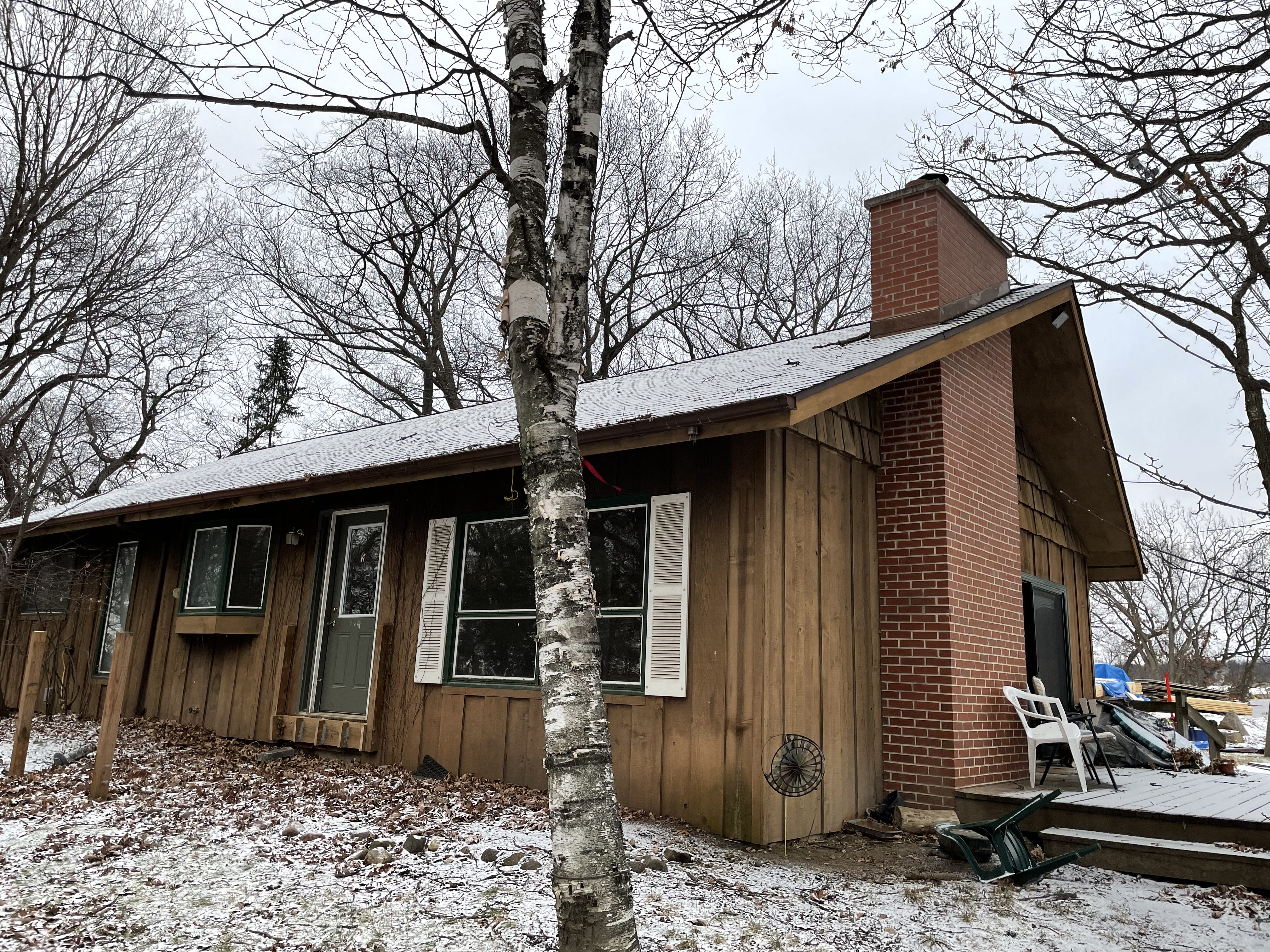
When I moved to the “house in the woods” in Fitchburg, John fenced in the back yard and he planted vegetables and flowers. In the woods I see deer, wild turkeys, groundhogs, rabbits and many squirrels. The birdbath gives the birds water to drink and a place to splash while the bird feeders bring a variety of beautiful birds close to the windows. That summer John and I did most of the gardening ourselves. He visited me nearly every day, as did Bill, who has built a home just a block from me. Here in the woods, it is peaceful and quiet, except for the birds. The Lord has answered many of my prayers and I can see His Hand at work in the lives of family and friends.
Afterword
In Bette’s last year she remained in her home in the forest, visited daily by friends and family and supported by Agrace Hospice Care in Fitchburg. During her last few weeks, Shannon Gibbs and her family (Homeworks Care Giving) provided daily assistance and care 16 hours a day. Our deepest gratitude to these organizations for this wonderful personal care that Bette received at the end of her life.





























 Alma Elizabeth Linton