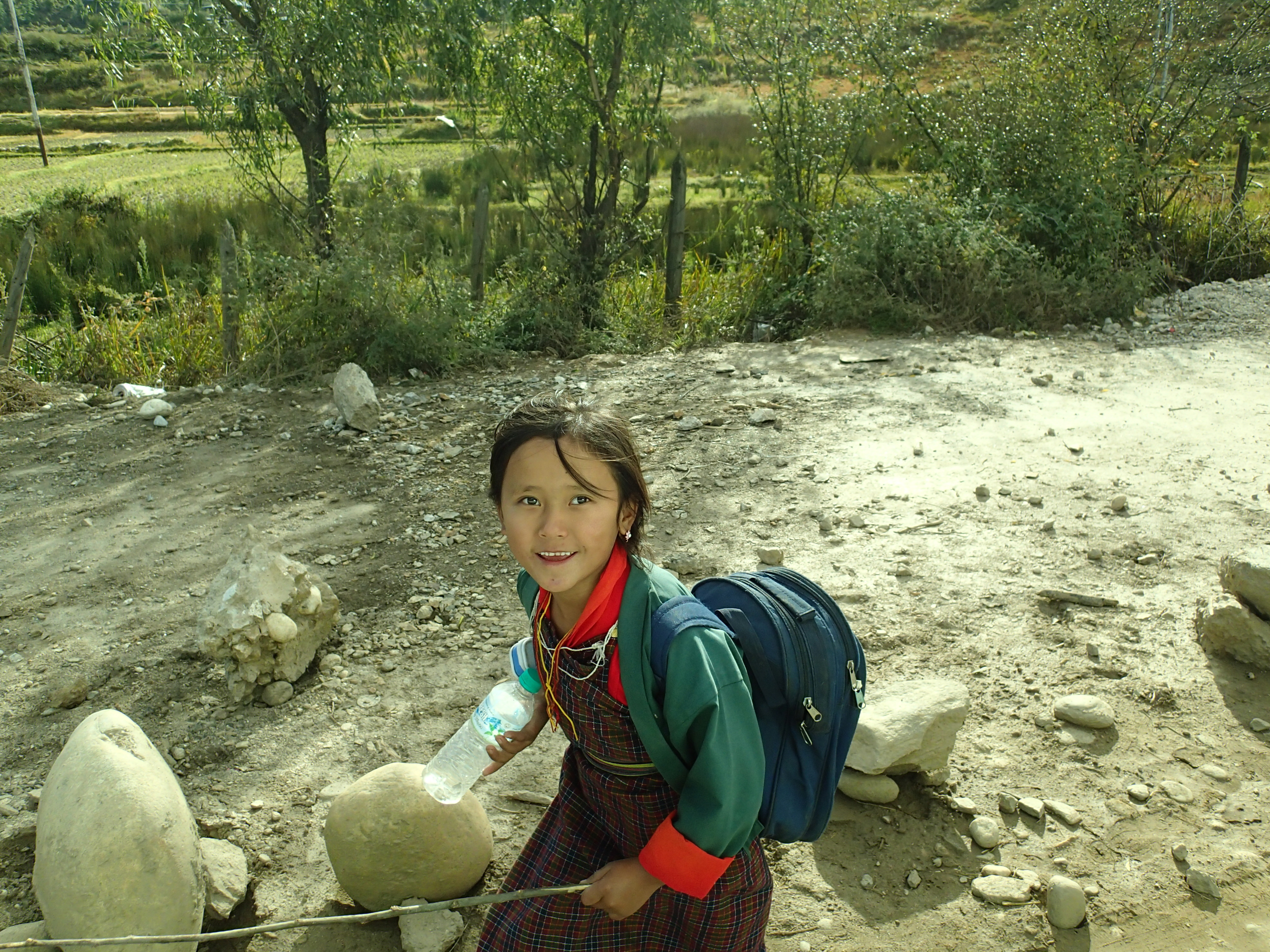
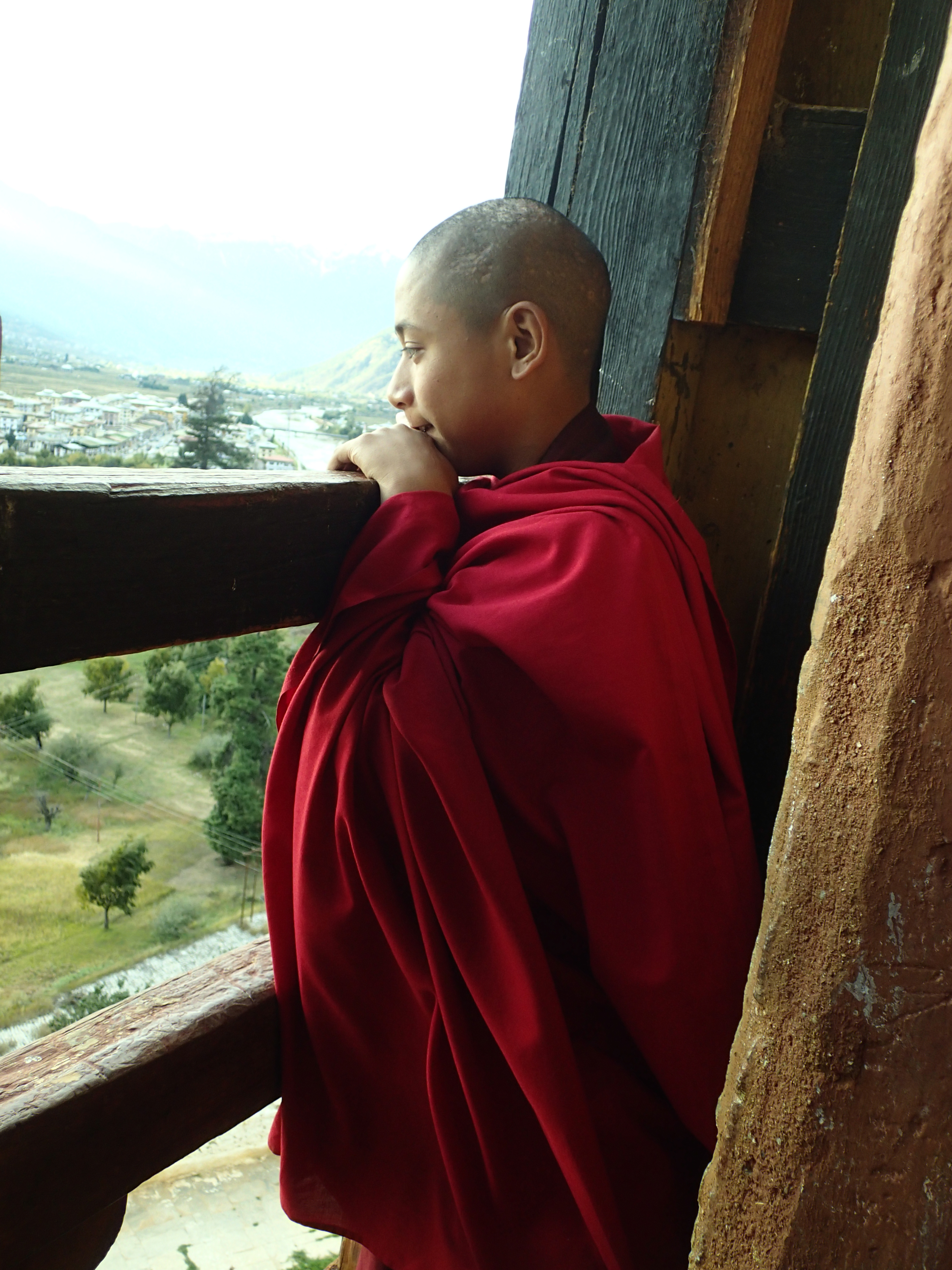
Most striking in this beautiful country where 80% of the population is Buddhist are the eyes and the faces of the people, with a smile and gentle greetings at every turn. From the face of a young school girl to the pensive contemplation of a Buddhist novitiate, diversity is the rule. This is much the way that Tibet must have been 75 years ago. 
Category: Uncategorized
-
-

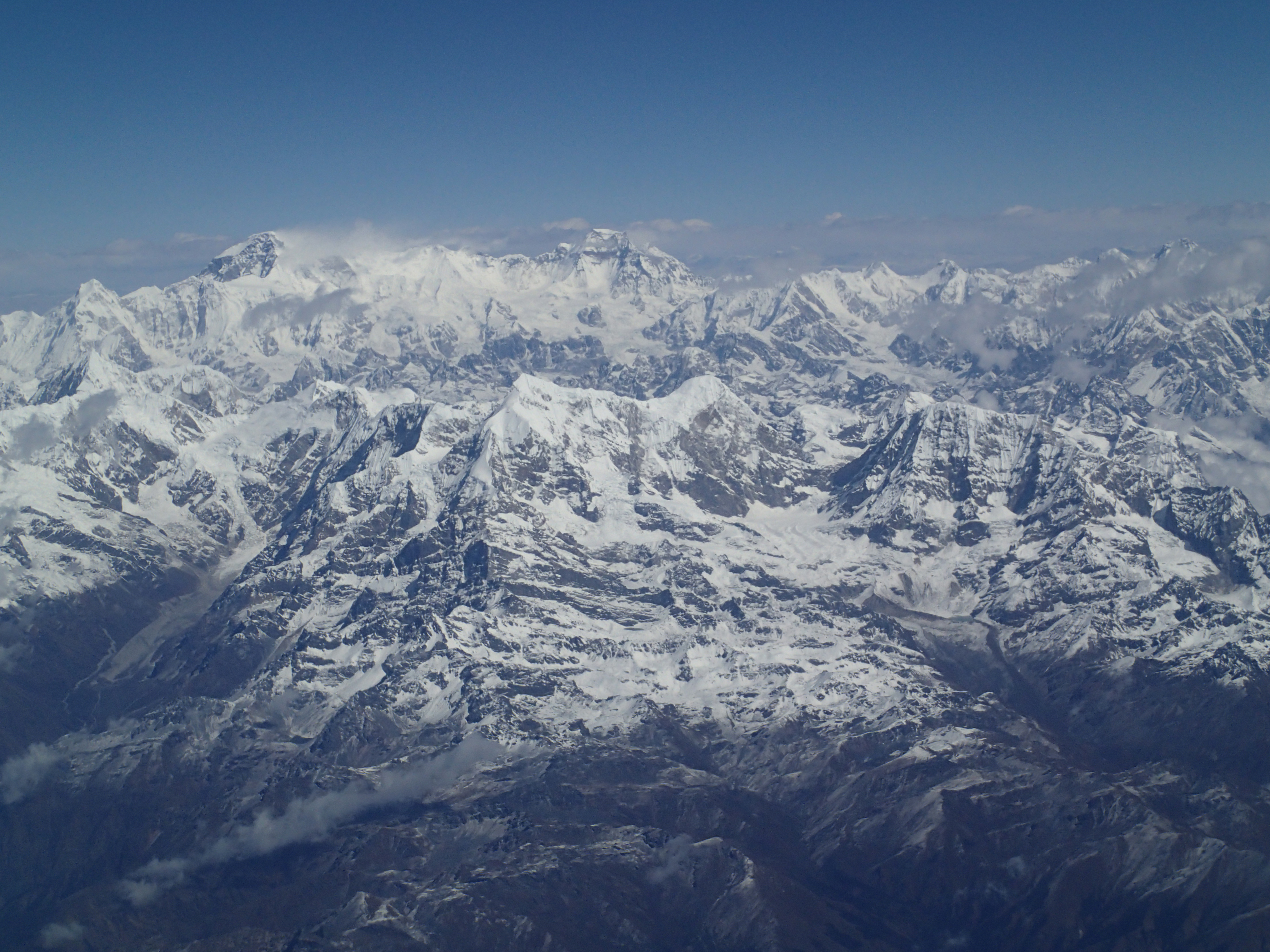
At 31,000 feet we are skimming the tops of the Himalayas, with Everest prominent in the view to the north of our eastward journey from Kathmandu to Paro, Bhutan. The descent into the Paro airport is so tricky that our chartered 757 skipped this part of the journey, and we flew on a scheduled Bhutan Airlines flight where the pilots exhibited great skill in the approach and landing, making sharp left and right turns on the final 20 miles into the airport.
-

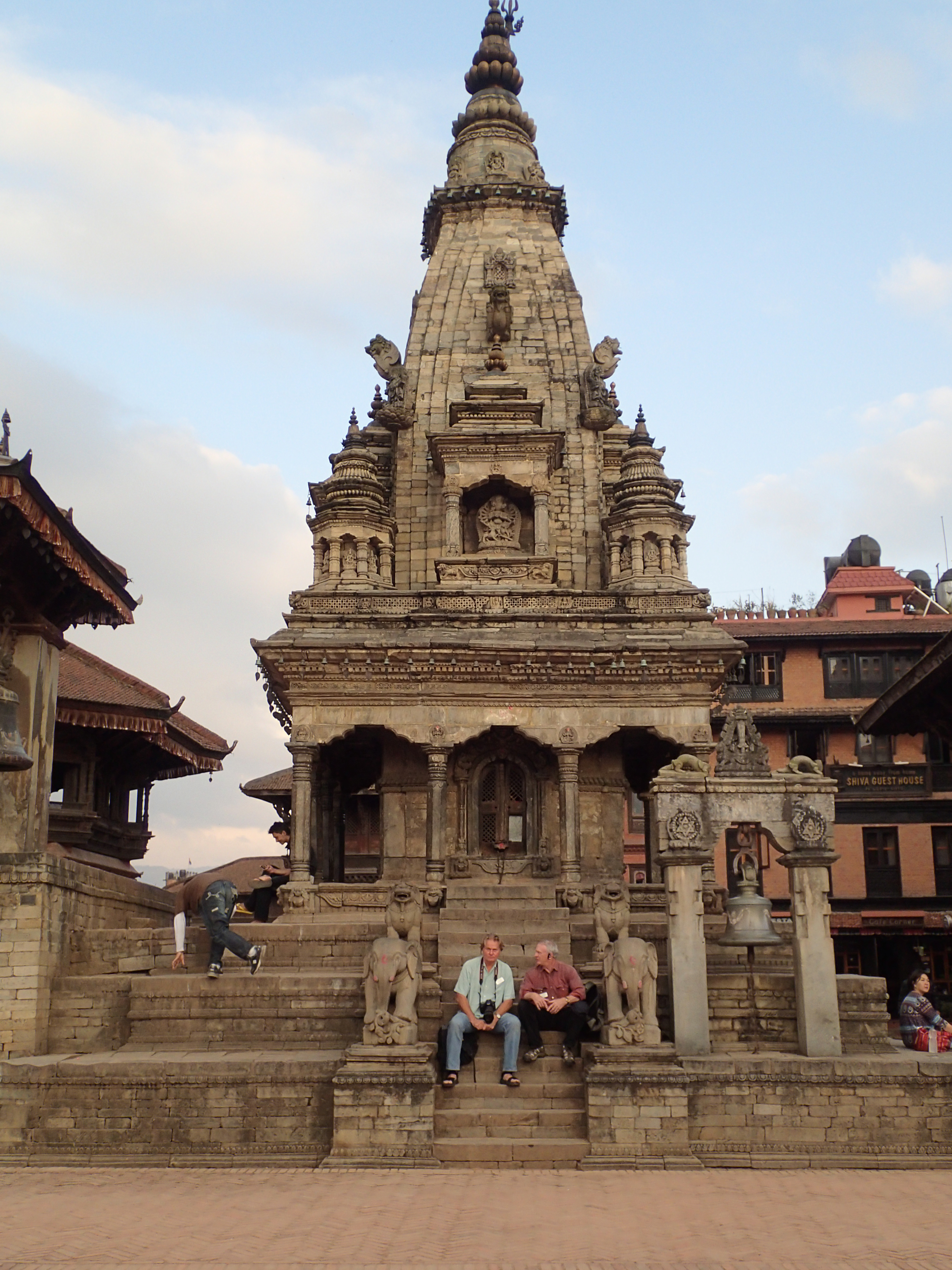
With just a few hours to experience Nepal on the way to Bhutan, we took advantage of the proximity of Bhaktapur, a city which reflects a Kathmandu of 100 year ago, at least in the preserved area of the historic city. On the steps to my left is the National Geographic Explorer-in-Residence Wade Davis.
-

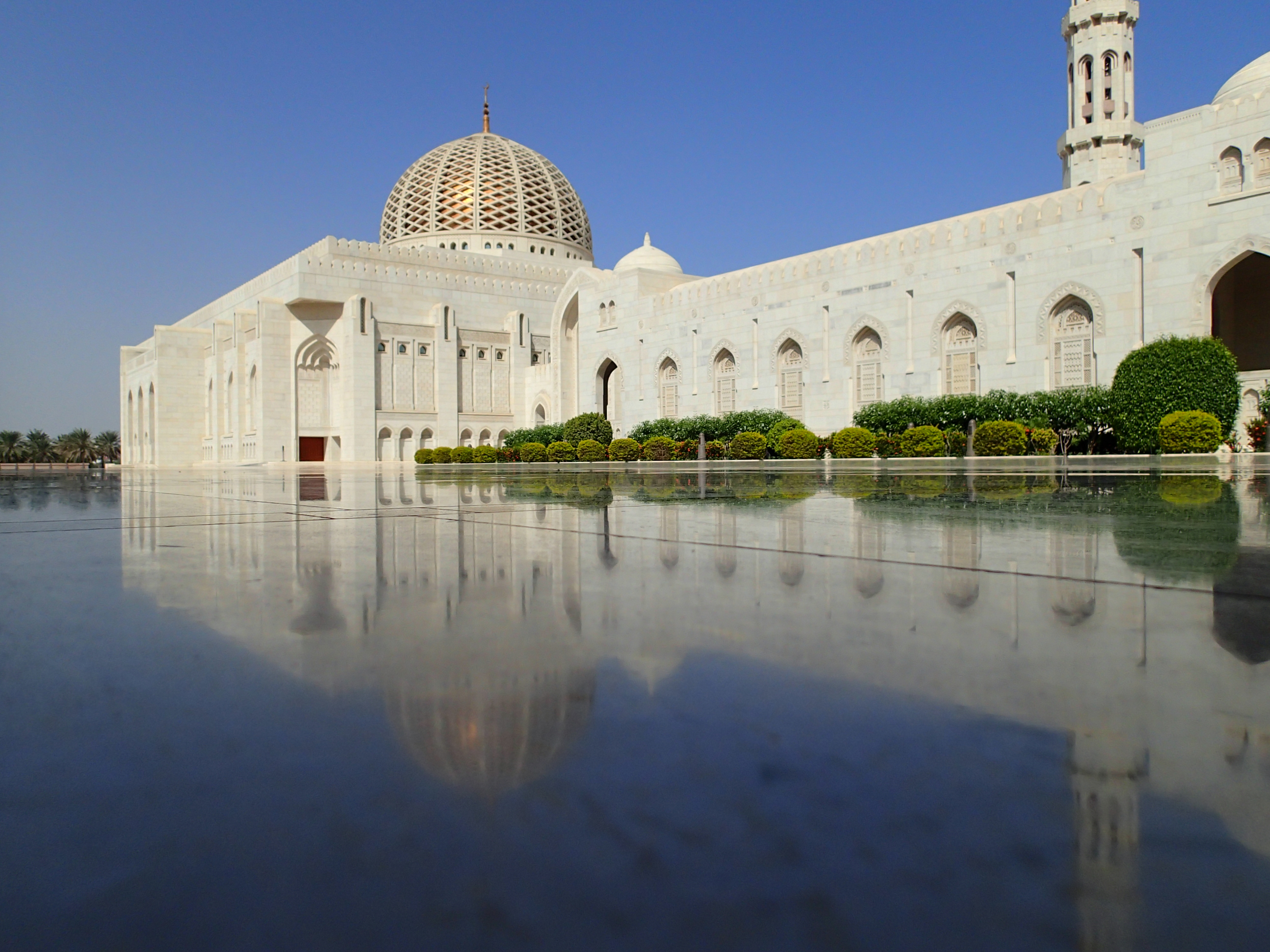
In 1992 Sultan Qaboos directed that his country of Oman should have a Grand Mosque. A competition for its design took place in 1993 and after a site was chosen at Bausher construction commenced in 1995. Building work, took six years and four months.
The Mosque is built from 300,000 tonnes of Indian sandstone. The main musalla (prayer hall) is square (external dimensions 74.4 x 74.4 metres) with a central dome rising to a height of fifty metres above the floor. The dome and the main minaret (90 metres) and four flanking minarets (45.5 metres) are the mosque’s chief visual features. The main musalla can hold over 6,500 worshippers, while the women’s musalla can accommodate 750 worshipers. The outer paved ground can hold 8,000 worshipers and there is additional space available in the interior courtyard and the passageways, making a total capacity of up to 20,000 worshipers.
-
Superb traditional Omani welcome, with a cup of strong mint tea.
On the flight over, Wade Davis gave a great talk about the value of culture to the planet and to civilization. As he put it,
“Ethnosphere – importance of the diversity on the planet. There have been 2500 human generations starting 65000 years ago. Each culture is a unique answer to the question “What does it mean to be human?”. Culture is not trivial; it is a body of moral and ethical values. It makes sense out of sensation and is the glue that allows civilization to occur.”

-
-
-
-